
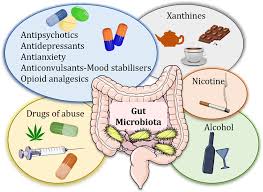
 Drugs can significantly alter the composition, diversity, and function of the human microbiome.
Both antibiotics and many non-antibiotic medications cause changes in the microbiome that may persist for years.
Antibiotics are well known to reduce microbial diversity, shift community structure, and promote antibiotic-resistant strains, with effects that can last months to years depending on the drug class and frequency of use.
Such changes can lead to dysbiosis, increased susceptibility to infections (e.g., Clostridioides difficile), and impact metabolic and immune functions.
Non-antibiotic drugs—including proton pump inhibitors (PPIs), metformin, statins, NSAIDs, antipsychotics, beta-blockers, and antidepressants—also induce notable changes in the gut microbiome.
PPIs and antipsychotics tend to decrease alpha diversity, while opioids may increase it.
Many of these drugs shift the abundance of specific taxa, such as increasing Gammaproteobacteria and Enterococcaceae, which are associated with nosocomial infections.
Metformin and PPIs, for example, are linked to increased abundance of potentially pathogenic bacteria and altered metabolic pathways.
Polypharmacy has additive effects, leading to more pronounced dysbiosis, increased antimicrobial resistance potential, and reduced beneficial microbial functions such as short-chain fatty acid metabolism.
Importantly, the microbiome can also metabolize drugs, alters their bioavailability, efficacy, and toxiciies(bidirectional pharmacomicrobiomics).
The effects of drugs on the microbiome are often long-lasting and cumulative, highlighting the need to consider medication history.