
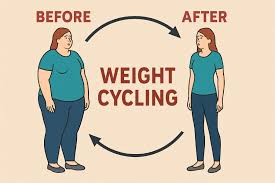
 Weight cycling, also known as yo-yo dieting, refers to the repeated pattern of intentional weight loss followed by unintentional weight regain, often resembling the up-and-down motion of a yo-yo.
It is estimated that 20–55% of adults experience it over time, with higher rates among women and those attempting weight loss through restrictive diets.
It typically occurs because crash diets or extreme calorie restriction are unsustainable, leading to regain (often more than lost) due to metabolic adaptations like reduced energy expenditure and increased fat storage efficiency.
The metabolism can slow down to conserve energy.
Hormones that regulate appetite, such as ghrelin (hunger hormone) and leptin, can become dysregulated, leading to increased hunger.
Weight loss often involves losing both fat and muscle mass.
When weight is regained, it is primarily as fat, particularly in the central (abdominal) area.
This can alter body composition over time, potentially leading to a higher body fat percentage and a lower resting metabolic rate.
Weight cycling is generally harmful and may pose greater risks than maintaining a stable higher weight in some cases.
Weight fluctuations cause repeated overshoots in blood pressure, heart rate, glucose, insulin, and lipids during regain phases, stressing the cardiovascular system more than steady obesity.
Large cohort studies link it to higher risks of heart disease, stroke, type 2 diabetes, and all-cause mortality—independent of BMI.
Weight cycling leads to body composition changes: Regain favors fat, especially visceral/central fat, over lean muscle, leading to higher body fat percentage, reduced muscle mass, and potential sarcopenic obesity.
Such fat overshooting makes future weight loss harder and increases inflammation.
Weight cycling promotes adipose tissue inflammation, macrophage infiltration, and pro-inflammatory cytokines; disrupts insulin sensitivity; and can lead to beta-cell fatigue in the pancreas.
Other risks from weight cycling include; Increased chances of endometrial/kidney cancer, hypertension, gallbladder issues, bone fractures, depression, binge eating, and poorer mental health.
In knee osteoarthritis patients weight cycling worsens pain, function, and depression over time.
Evidence from large cohorts and recent reviews—shows stable weight (even if higher) often yields better outcomes than cycling.
Prevention/Recommendations:
Focusing on sustainable habits: balanced nutrition, regular physical activity, and behavior changes rather than restrictive diets.
Weight stability or gradual, maintained loss is ideal.
Weight cycling can cause frequent fluctuations in cardiovascular risk factors like blood pressure, heart rate, blood glucose, and lipids.
This repeated weight change variables puts additional stress on the cardiovascular system and is linked to a higher risk of heart attack, stroke, and cardiovascular mortality.
Weight cycling is a strong independent predictor of developing type 2 diabetes, possibly by impairing pancreatic beta-cell function and insulin sensitivity.
Weight cycling may exacerbate chronic inflammation in adipose (fat) tissue and systemically throughout the body.
Weight cycling can lead to a less favorable body composition, with decreased skeletal muscle mass and increased fat accumulation.
Associations with weight cycling have also been found with gallbladder disease, high cholesterol, certain forms of cancer (such as endometrial and kidney cancer), and a higher risk of all-cause mortality.
There are also potential negative psychological consequences, including frustration, feelings of failure, life dissatisfaction, and an increased risk for binge eating.