
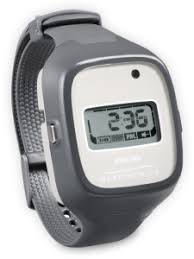
 Actigraphy is a non-invasive method of monitoring human rest and activity cycles using a small, wearable device called an actigraph.
It is typically worn on the wrist or ankle like a watch for several days to weeks, the device contains an accelerometer to detect movement, providing objective data on sleep-wake patterns and overall physical activity.
An internal accelerometer records movement multiple times per second.
Periods of activity are recorded as wakefulness while periods of stillness are interpreted as sleep.
Some actigraphs also incorporate light or temperature sensors to enhance the accuracy of sleep-wake estimations and provide additional insights into environmental factors affecting sleep.
A concurrent sleep diary helps accurately interpret the data and differentiate between true sleep and quiet wakefulness.
Actigraphy is a valuable tool in sleep medicine. particularly for long-term monitoring in a patient’s natural home environment.
It is used to diagnose sleep disorders, and aids in the assessment of conditions like insomnia, circadian rhythm sleep-wake disorders, delayed or advanced sleep phase syndrome, shift work disorder and insufficient sleep syndrome.
One can use actigraphy to track the effectiveness of treatments for sleep disorders over time, such as behavioral therapies or medication.
It is useful for monitoring sleep in young children or elderly patients with conditions like dementia, who may struggle with in-lab testing or keeping reliable sleep logs.
It can be used to estimate total sleep time during a home sleep apnea test or prior to a test for central disorders of hypersomnolence, ensuring other conditions do not skew results.
It is a non-invasive, low patient burden, and convenient for use at home over several days/weeks.
It cannot measure sleep stages, which requires an in-lab polysomnography.
Tends to overestimate sleep in patients who are awake but lie still for long periods as it has low specificity for detecting wakefulness.
Less accurate in cases of very disturbed or fragmented sleep.
Captures real-world, day and night activity patterns. Actigraphy is generally used as a supplementary diagnostic tool in conjunction with a full clinical evaluation and sleep diaries, rather than a standalone replacement for comprehensive in-lab sleep studies when those are indicated.