
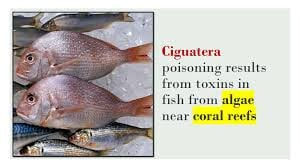
 Ciguatera is a type of food poisoning caused by eating fish contaminated with ciguatoxin, a neurotoxin produced by certain marine algae.
Ciguatera is the world‘s most common non-bacterial seafood borne illness who can be acquired from consumption of fish with toxic concentrations as low as 0.1 parts per billion.
Ingestion of tasteless, lipophilic and heat stable ciguater toxins can cause G.I. pain, nausea, vomiting, paresthesia of mouth, hand, and foot, pruritud and urticaria with a mortality of less than 1%.
Marine algae-dinoflagellates, primarily Gambierdiscus species.
Increased sea surface temperatures contribute to expansion of tropical pathogenic, microalgae advancing to latitudes beyond the tropics with increasing risk of harmful blooms.
The dinoflagellates Gambiediscus and Fukuya found in harmful algal blooms produced ciguatoxin and can accumulate in fish and cause of poisoning.
The toxin accumulates in the food chain – small fish eat the algae, larger predatory fish eat the smaller fish, concentrating the toxin in their tissues.
The fish themselves aren’t affected, but humans who consume them can develop ciguatera poisoning.
High-risk fish: Barracuda, grouper, snapper, amberjack Moray eel, king mackerel, large tuna Other large reef fish from tropical/subtropical waters Risk is highest in fish from the Caribbean, Pacific islands, and tropical Atlantic
Symptoms typically appear 1-6 hours after eating: Gastrointestinal: Nausea, vomiting, diarrhea, abdominal pain
Neurological: Temperature reversal where cold feels hot, hot feels cold. Paresthessias in hands, feet, mouth Muscle aches and weakness Dizziness, headache Metallic taste Cardiovascular: Low blood pressure, slow heart rate
The temperature reversal sensation is characteristic – ice cream may feel burning hot, while hot coffee feels cold.
Symptoms can last days to weeks, sometimes months.
Neurological symptoms tend to persist longest.
Treatment: Mainly supportive care with fluids and symptom management.
Mannitol may help with severe neurological symptoms if given early.
Avoid large reef fish from high-risk areas, especially fish heads and organs where toxin concentrates most.
The toxin isn’t destroyed by cooking, freezing, or normal food preparation methods.