
 Endoscopic bariatric surgery refers to a group of minimally invasive, transoral endoscopic procedures designed to induce weight loss and improve metabolic health in patients with obesity.
Endoscopic bariatric surgery procedures are performed using flexible endoscopes and specialized devices, without external incisions or traditional surgical approaches.
The most established and FDA-approved endoscopic bariatric procedures include intragastric balloons and endoscopic sleeve gastroplasty.
Intragastric balloons are space-occupying devices placed endoscopically into the stomach, filled with saline, and left in place for 6–8 months.
Intragastric balloons promote satiety and delay gastric emptying, leading to weight loss.
Candidates typically have a BMI of 30–40 kg/m².
Intragastric balloons, combined with lifestyle modification, result in greater weight loss than lifestyle modification alone, but some weight regain is common after balloon removal.
Adverse effects include nausea, vomiting, and abdominal pain.
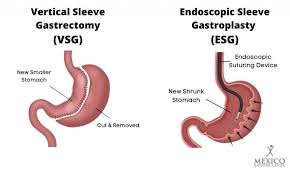
Endoscopic sleeve gastroplasty is an organ-sparing procedure in which the stomach is sutured endoscopically to reduce its volume, mimicking the restrictive effect of surgical sleeve gastrectomy.
This procedure is associated with significant weight loss and a favorable safety profile, though less weight loss than surgical options.
It is suitable for patients with obesity who are not candidates for, or prefer to avoid, surgery.
These endoscopic bariatric and metabolic therapies for adults with a BMI ≥30 kg/m², or BMI 27–29.9 kg/m² with at least one obesity-related comorbidity, in conjunction with lifestyle modification.