
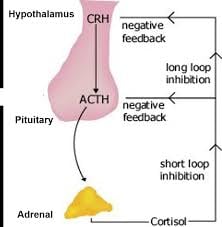
 Adrenocorticotropic hormone (ACTH), also known as corticotropin, is a 39-amino acid peptide hormone produced and secreted by the anterior pituitary gland in response to corticotropin-releasing hormone (CRH) from the hypothalamus.
ACTH is derived from its precursor molecule proopiomelanocortin.
ACTH acts primarily on the adrenal cortex, where it stimulates the synthesis and release of glucocorticoids (mainly cortisol), mineralocorticoids (aldosterone), and adrenal androgens (DHEA).
ACTH binds to the melanocortin 2 receptor (MC2R) on adrenal cortical cells, triggering steroidogenesis.
Corticotrophin is structurally similar to melanocyte stimulating hormone, and elevated corticotropin levels, can directly stimulate production of melanin by melanocytes resulting in hyperpigmentation.
The secretion of ACTH is regulated by a negative feedback loop.
AN elevated circulating cortisol level inhibits both CRH and ACTH production, while cortisol deficiency leads to increased ACTH secretion.
Dysregulation of ACTH production is central to several endocrine disorders, including Cushing’s disease with excess ACTH and Addison’s disease with ACTH elevation secondary to adrenal failure.