
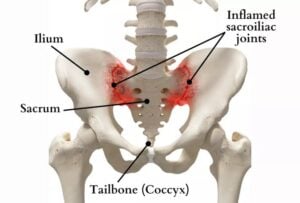
 Sacral pain originates in or around the sacrum—the triangular bone at the base of the spine—and is most commonly caused by sacroiliac (SI) joint dysfunction or sacroiliitis (inflammation of the SI joints).
Referred lumbar, hip, or pelvic pain — lumbar radiculopathy, hip disease, pelvic pathology, or urinary and gastrointestinal disease can be perceived in the sacral region.
Sacral insufficiency or traumatic fracture — particularly after a fall, in osteoporosis, older age, or prolonged corticosteroid exposure; plain radiographs may miss sacral fractures, with CT or MRI providing better assessment.
Sacral pain is common and usually comes from a mechanical cause.
Sacroiliac joint pain is often unilateral and below the fifth lumbar vertebra, worsened by sitting or standing.
Isolated sacral pain is most often mechanical, sacroiliac, or coccygeal, but fracture, infection, malignancy, and cauda equina syndrome must be excluded when red flags are present.
Spinal or sacroiliac infection — fever, severe buttock pain, immunosuppression, intravenous drug use, recent bacteremia or procedure, and elevated inflammatory markers increase concern.
MRI is often needed when infection is suspected.
Mechanical sacroiliac or lumbosacral pain — typically related to movement, loading, prolonged sitting, or a specific activity.
Discomfort that worsens with prolonged sitting, standing, walking, running, climbing stairs, or shifting weight onto a single leg.
Reduced mobility or morning stiffness in the lower back and pelvic area.
Main Causes:
SI Joint Dysfunction: Abnormal motion, too loose or too stiff, in the joints connecting the sacrum to the pelvis, accounting for 15% to 30% of chronic lower back pain.
Sacroiliitis: Inflammation driven by inflammatory arthritis (such as ankylosing spondylitis or psoriatic arthritis), inflammatory bowel disease, or localized infections.
Coccydynia — focal pain over the coccyx, often worse with sitting or rising from a chair, sometimes after a fall or prolonged pressure.
Malignancy — prior cancer, unexplained weight loss, progressive or nonmechanical pain, and pain that persists despite conservative treatment are concerning.
Cauda equina syndrome — urinary retention or incontinence, fecal incontinence, saddle anesthesia, bilateral radicular pain, or progressive leg weakness requires urgent MRI and specialist assessment.
Mechanical & Structural Stress: Pregnancy (due to hormone-induced ligament laxity), prior trauma or falls, leg-length discrepancies, scoliosis, or previous lumbar spine fusion surgery.
Treatment Options:
Conservative Care: Over-the-counter anti-inflammatories (NSAIDs like ibuprofen), alternating ice and heat, activity modification, and targeted physical therapy to strengthen the core and pelvic muscles.
Interventional Procedures: Diagnostic anesthetic/corticosteroid injections into the SI joint, radiofrequency ablation, or platelet-rich plasma (PRP) therapy.
Surgical Options: Minimally invasive SI joint fusion (using triangular titanium implants) for severe cases that fail to respond to months of conservative treatment.
Sacroiliac joint (SIJ) dysfunction causes 15% to 30% of low back pain, overlapping with lumbar pathology and mimicking sciatica (L5-S1 distribution).
Sacroiliac joints connect the sacrum to the pelvis on each side via stabilizing ligaments.
Symptoms: Low back and buttock pain; referred thigh and leg …
Signs of Sacroiliac Joint Pain
Lower back pain. Lower back pain is the most prevalent symptom of sacroiliac joint dysfunction.
It is typically felt on one side of the lower back.
Causes Symptoms Pain is often the main symptom, usually in the lower back and buttocks, and sometimes the back and upper leg. Pain related to the sacroiliac joint
Sacroiliac (SI) joint dysfunction, often one-sided and worse with standing up, stairs, or rolling over in bed.
Muscle or ligament strain
Pregnancy or postpartum changes
Prolonged sitting or a hard fall onto the tailbone
Arthritis, including inflammatory types like ankylosing spondylitis (morning stiffness that eases with movement)
Pinched or irritated nerves from a lower spine disc problem
Examination should include gait, lower-limb neurologic function, sacral tenderness, hip examination, and sacroiliac provocation testing.
Management: Gentle movement and walking rather than bed rest Heat or ice, whichever feels better Avoiding long stretches of sitting, and using a cushion sitting Over-the-counter pain relievers Physical therapy if it lasts more than a few weeks
In uncomplicated acute pain without red flags, conservative management and reassessment are generally appropriate; trauma, fever, cancer history, progressive symptoms, or bowel, bladder, or saddle sensory changes should prompt urgent evaluation and targeted CT or MRI rather than routine symptomatic treatment alone.