
 PRIMARY PREVENTION OF CAD
People with no prior MI, angina, PCI, or CABG.
Lifestyle interventions
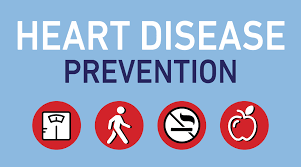
Diet: Mediterranean or DASH-style pattern emphasizing fruits, vegetables, whole grains, nuts, legumes, and fish; limit saturated fat to <10% of calories, avoid trans fats, reduce sodium to about 1.5–2.3 g/day, and minimize added sugars and ultra‑processed foods.
Physical activity: At least 150 minutes/week of moderate aerobic exercise or 75 minutes/week vigorous activity, plus resistance training 2–3 days/week.
Weight: Aim for BMI 18.5–24.9; for overweight/obese patients, a 5–10% weight loss meaningfully improves cardiometabolic risk profiles.
Tobacco: Complete cessation of smoking/vaping and avoidance of secondhand smoke, using counseling plus pharmacotherapy as needed.
Alcohol: If used, keep to ≤2 drinks/day for men and ≤1 drink/day for women.
Blood pressure: Target <130/80 mm Hg in most adults using lifestyle measures plus ACEI/ARB, thiazide, or CCB according to comorbidities.
Lipids – statins: High‑intensity statin for LDL‑C ≥190 mg/dL, diabetes age 40–75 with additional risk factors, or 10‑year ASCVD risk ≥20%.
Moderate‑intensity statin for diabetes age 40–75 or 10‑year ASCVD risk 7.5–20%, with coronary artery calcium scoring in borderline/uncertain cases.
Lipids – non‑statins: Add ezetimibe, PCSK9 inhibitor, or bempedoic acid in severe hypercholesterolemia or statin intolerance if LDL targets not met.
Diabetes: Aim A1c generally <7%; use SGLT2 inhibitors or GLP‑1 receptor agonists in appropriate diabetics for additional cardioprotective benefit.
Aspirin and vaccines (primary)
Aspirin: Not used routinely for primary prevention; may be selectively considered in adults 40–70 with very high ASCVD risk and low bleeding risk, and should be avoided in adults >70 or anyone with increased bleeding risk.
Vaccination: Annual influenza vaccination and age‑appropriate COVID‑19 and pneumococcal vaccination are associated with lower MI and cardiovascular event rates.
SECONDARY PREVENTION OF CAD
Patients with prior MI, PCI, CABG, or stable angina.
Lifestyle and cardiac rehab
Lifestyle: Same targets as primary prevention but with stricter adherence; Mediterranean diet has demonstrated reductions in recurrent events.
Cardiac rehabilitation: Structured cardiac rehab reduces mortality by roughly 25–30% and improves function and psychosocial health; depression, anxiety, and sleep apnea should be identified and treated.
Antiplatelet therapy
Aspirin: Low‑dose aspirin (75–100 mg/day) is recommended indefinitely unless contraindicated.
Dual antiplatelet therapy (DAPT): Aspirin plus a P2Y12 inhibitor for 12 months after ACS (MI or unstable angina) is the default; 6–12 months after PCI for stable CAD, with duration individualized to ischemic vs bleeding risk.
Extended DAPT: Consider only in selected very high‑risk, low‑bleeding‑risk patients.
Lipids, BP, diabetes (secondary)
LDL goals and therapy: For very high‑risk ASCVD, aim for LDL‑C <55–70 mg/dL and ≥50% reduction from baseline using high‑intensity statin, then add ezetimibe and PCSK9 inhibitor if needed; bempedoic acid is an option when statins are not tolerated.
Blood pressure: Target <130/80 mm Hg; use ACEI/ARB in CAD with diabetes, hypertension, or LV dysfunction, and beta‑blockers for at least 3 years post‑MI and longer when LV dysfunction or angina persists.
Diabetes: SGLT2 inhibitors (e.g., empagliflozin, dapagliflozin) and GLP‑1 agonists (e.g., liraglutide, semaglutide) reduce recurrent cardiovascular events and are preferred in appropriate patients.
Additional pharmacologic strategies
Heart failure/post‑MI: Aldosterone antagonists (eplerenone, spironolactone) in post‑MI patients with EF ≤40% or symptomatic HF; SGLT2 inhibitors for HF benefit even without diabetes.
Angina: Ranolazine and long‑acting nitrates for symptom control when needed.
Triglycerides: Icosapent ethyl (4 g/day EPA) reduces ischemic events in high‑risk patients with elevated triglycerides on statins (REDUCE‑IT).
High‑risk lipid/immune modulation: PCSK9 inhibitors for very high‑risk patients not at LDL goal; low‑dose colchicine and other anti‑inflammatory agents (e.g., canakinumab) have shown event reduction in select high‑risk populations.
PCSK9 inhibition with evolocumab leads to a lower risk of first cardiovascular events than placebo among patients with atherosclerosis or diabetes and without a previous myocardial infarction or stroke:VESALIUS-CV study.
In high risk patients without known significant atherosclerosis and with diabetes, evolocumab reduced the risk of the first major cardiovascular event.
Across both primary and secondary prevention, the unifying principle is comprehensive risk factor modification through intensive lifestyle changes plus guideline‑directed medical therapy tailored to each patient’s global risk profile.