
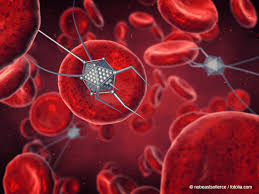
 Nanobots are an emerging technology in vascular disease, for targeted drug delivery, thrombolysis, enhanced imaging, and localized therapy of atherosclerosis and thrombosis.
Their autonomous movement and ability to be guided by external fields by magnetic, ultrasound, and light allow for precise navigation and retention at vascular lesion sites, overcoming limitations of conventional therapies.
Scientists have developed nanoparticles that can potentially remove plaque from blood vessels and restore vascular patency by two main approaches:
Plaque-eating nanoparticles that target immune cells called macrophages within plaques, delivering drugs that stimulate these cells to engulf and eat dead cells within the plaque, resulting in reduced plaque size .
Inflammation-targeting therapy, using nanoparticles to reactivate a process called efferocytosis, where dead or damaged cells contributing to plaques are cleared out by the immune system, showing substantial plaque reduction without side effects like anemia.
Researchers are developing micro-swimmers made of tiny iron oxide beads that can be magnetically controlled to loosen hardened plaque, working alongside surgical drills to clear blocked arteries .
In thrombolytic therapy, nanobots can deliver agents such as tPA or nattokinase directly to clots, improving recanalization rates and minimizing systemic side effects.
tPA-anchored magnetic nanorobots have demonstrated high-precision thrombolysis in submillimeter vessels, with the added benefit of post-procedure retrieval to reduce residual material risk.
Magnetic vortex nanorobots loaded with thrombolytic drugs can mechanically disrupt clots and release drugs in response to magnetic fields, achieving high rates of vessel recanalization in animal models.
Researchers have developed magnetically controlled nanorobots that can navigate to blood clots in submillimeter vessels, dissolve them using clot-busting drugs, and then be retrieved with about 80% efficiency .
Initial tests showed these retrievable nanobot swarms can dissolve a blood clot in about 20 minutes in vitro and 30 minutes in human placenta tissue.
For atherosclerosis, nanobots and nanomotors can enhance drug penetration and retention at plaque sites, deliver anti-proliferative or anti-inflammatory agents, and even facilitate plaque imaging.
Nanomotors driven by local biochemical cues such as nitric oxide production in inflamed vessels, have shown improved drug delivery and therapeutic effects in preclinical models.
Nanobots also play a role in advanced vascular imaging and theranostics, this enables molecular-level visualization of plaque composition and activity, which can guide personalized therapy.
Multifunctional nanoplatforms integrate diagnostic and therapeutic capabilities, improving both disease characterization and treatment outcomes.
Early clinical trials of nanoparticle-based therapies have shown safety and efficacy in vascular disease.
Advantages of nanobots over current treatments:
Precision as nanobots can target specific locations, minimizing side effects
Less invasive
Better outcomes with researchers believe nanobot methods could achieve 80-90% success rates compared to current 60% success rates for chronic total occlusion treatments.
Some designs allow nanobots to be collected after treatment, reducing toxicity concerns.