
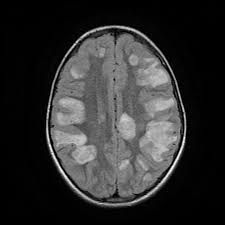
Myelin Oligodendrocyte Glycoprotein Antibody-Associated Disease (MOGAD)
An autoimmune, inflammatory demyelinating disorder of the central nervous system (CNS) characterized by the presence of pathogenic immunoglobulin G (IgG) antibodies against myelin oligodendrocyte glycoprotein (MOG).
MOG is a protein located on the outer surface of myelin sheaths in the CNS, making it a target for autoimmune attack.
MOGAD presents with a spectrum of clinical phenotypes.
It most commonly optic neuritis, transverse myelitis, and acute disseminated encephalomyelitis (ADEM), but can also include cerebral cortical encephalitis and brainstem or cerebellar syndromes.
The disease can occur in both adults and children, with optic neuritis being the most frequent presentation in adults and ADEM in children.
The course may be monophasic or relapsing.
About 30–50% of adults and 50–72% of children have a monophasic course, while others experience relapses that can lead to accumulating neurological disability.
Diagnosis relies on detecting MOG-IgG antibodies.
Tests used are optimized cell-based assays, in patients with compatible clinical and MRI features.
MRI findings and clinical presentation help distinguish MOGAD from multiple sclerosis (MS) and aquaporin-4 antibody-positive neuromyelitis optica spectrum disorder (AQP4+ NMOSD), which are separate entities.
MOGAD lesions typically show perivenous demyelination with MOG-dominant myelin loss and a predominance of CD4+ T cells, differing from MS and NMOSD.
Treatment of acute attacks usually involves high-dose intravenous corticosteroids, intravenous immunoglobulin (IVIG), or plasma exchange, with maintenance immunosuppression considered for relapsing cases.
Prognosis is generally favorable.
There is better recovery from acute attacks compared to NMOSD, but relapses can increase disability.
MOGAD affects all age groups, with a prevalence of 1.3–2.5 per 100,000 and no clear sex or racial predilection.
Preceding infections are reported in 20–40% of cases, and coexisting autoimmune disorders are less common than in NMOSD.
A distinct CNS demyelinating disease defined by anti-MOG antibodies, with unique clinical, radiological, and pathological features, and a variable disease course.