
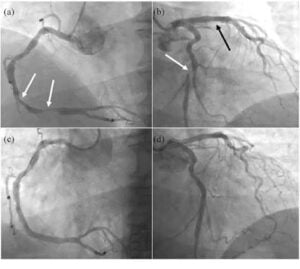
 Multivessel coronary artery disease (CAD) means significant blockages (typically ≥50-70% narrowing) in two or more of the three major coronary arteries — the left anterior descending (LAD), the left circumflex (LCx), and the right coronary artery (RCA) — or their major branches.
More heart muscle is at risk of reduced blood flow, raising risk of heart attack, heart failure, and arrhythmias.
Treatment decisions are more complex since blocking flow in one artery during a procedure can be riskier if others are already compromised.
Usually found via coronary angiogram (cardiac catheterization) or CT coronary angiography, often after symptoms like exertional chest pain, an abnormal stress test, or a heart attack.
Medical therapy alone— for many stable patients, especially with milder disease: statins, antiplatelet drugs, blood pressure control, beta-blockers,
PCI (angioplasty + stenting)— treating multiple vessels with stents in one or staged procedures.
CABG (bypass surgery)— surgically rerouting blood flow around blocked segments, often using an artery (like the internal mammary artery) and/or vein grafts.
Choosing between them depends on:
SYNTAX score (anatomical complexity) Diabetes— CABG often favored (better long-term outcomes in trials like FREEDOM) Left main involvement— leans toward CABG Ejection fraction / heart failure— reduced EF often favors CABG Surgical risk— frailty, kidney disease, lung disease may favor PCI Symptom burden and urgency— acute heart attack settings often favor PCI first
With appropriate treatment with medical therapy plus revascularization when indicated, and risk factor control — blood pressure, cholesterol, blood sugar, smoking cessation, diet, exercise — many people with multivessel CAD do well long-term.
The decision of *how* to revascularize is individualized by a heart team looking at anatomy plus overall health.
If you’re asking about a specific diagnosis, sharing details like ejection fraction, diabetes status, or your SYNTAX score would let the conversation get more specific — otherwise, this is a good starting overview.