
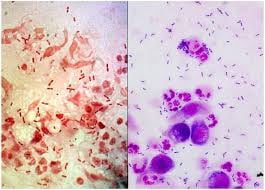
 Moraxella catarrhalis is a Gram-negative aerobic diplococcus bacterium and a common human respiratory pathogen.
Gram-negative, aerobic diplococcus (kidney bean-shaped pairs) Oxidase and catalase positive
Normal habitat Commensal of the upper respiratory tract (nasopharynx), especially in children: commonly colonizes the upper respiratory tract and can cause infections such as otitis media, sinusitis, bronchitis, and pneumonia, especially in children and people with chronic lung disease or weakened immunity.
It is an exclusively human mucosal pathogen and a common commensal in the nasopharynx, but it can become pathogenic and is a well-recognized cause of respiratory infections and occasional invasive disease such as bacteremia or meningitis.
It is also a major cause of acute otitis media in children and COPD exacerbations in adults.
Diseases caused by Otitis media – one of the top 3 causes in children (along with S. pneumoniae and H. influenzae)
Sinusitis
Bronchitis / COPD exacerbations – major pathogen in adults with underlying lung disease
Pneumonia – especially in elderly or immunocompromised Rarely: bacteremia, meningitis, endocarditis
Virulence factors
Outer membrane proteins (OMPs) aid adhesion Lipooligosaccharide (LOS) contributes to inflammation Biofilm formation Beta-lactamase production (~90–95% of strains)
Treatment Most strains are beta-lactamase producers, so penicillin alone is inadequate Use: amoxicillin-clavulanate, TMP-SMX, macrolides (azithromycin), or fluoroquinolones
Usually susceptible to second- and third-generation cephalosporins
Microbiology
The organism is oxidase-positive and typically shows beta-lactamase production, which explains resistance to penicillin and ampicillin in most isolates.
Treatment often relies on amoxicillin-clavulanate, certain cephalosporins, macrolides, doxycycline, or fluoroquinolones depending on the scenario and local susceptibility patterns.
There is no widely available vaccine or routine prophylaxis, and prevention mainly depends on standard infection-control measures and reducing risk factors such as smoking in patients with chronic lung disease.