
Menkes disease is a rare, X-linked genetic disorder caused by mutations in the ATP7A gene, which impairs how the body absorbs and distributes copper.
 Causes dangerously low levels of copper in the brain and liver, while copper accumulates abnormally in the kidneys and intestinal lining.
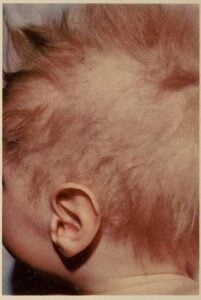
Hair Abnormalities: Sparse, steel-colored, or colorless hair that is brittle and kinks easily (pili torti).
Neurological Decline: Severe hypotonia (floppy muscle tone), seizures, developmental delay, and intellectual disability.
Growth and Physical Issues: Failure to thrive, low body temperature, sagging facial features, weak bones (osteoporosis), and twisted (tortuous) blood vessels.
Inheritance: It is inherited in an X-linked recessive pattern, meaning it primarily affects males.
Diagnosis: Confirmed using blood and urine tests (checking low serum copper and ceruloplasmin levels), skin biopsies, X-rays showing abnormal skull features like Wormian bones, and ATP7A genetic testing.
Treatment: There is no cure.
Management includes supportive care and early administration of copper supplements—such as subcutaneous copper histidine injections—ideally started within the first few weeks (or days) of life to help improve outcomes.
Prognosis: The outlook for classic Menkes disease is generally poor, with many untreated or late-treated infants experiencing severe neurodegeneration and a shortened life expectancy typically under age 3.
Place on site with images