
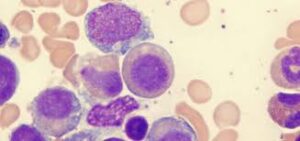
 See Myelodysplastic syndrome
MDS has an incidence of approximately 4 per 100,000 in the US, rising to 25 per 100,000 in those over 65 years, with a median age at diagnosis of 70 years.
Risk factors include advanced age and prior exposure to cytotoxic agents.
Prognosis and management are guided by validated scoring systems such as the International Prognostic Scoring System (IPSS) and its revised version (IPSS-R), which incorporate cytopenias, marrow blast percentage, and cytogenetic/molecular abnormalities.
Therapy is individualized: The primary distinction is between lower-risk and higher-risk MDS, with goals of therapy focused on symptom control and transfusion independence in lower-risk disease, and prolongation of survival and prevention of AML transformation in higher-risk disease.
Myelodysplastic syndrome (MDS) management involves a risk-stratified approach.
Treatment is based on patient factors and disease characteristics.
Risk stratification using scoring systems like the Revised International Prognostic Scoring System (IPSS-R), which considers: Cytogenetics Bone marrow blast percentage Degree of cytopenias Age and performance status
Management of Lower-Risk MDS:
Supportive care: red blood cell and platelet transfusions, iron chelation for transfusion-dependent patients, and prophylactic antibiotics for severe neutropenia.
First-line therapy for anemia is erythropoiesis-stimulating agents (ESAs), such as recombinant erythropoietin or darbepoetin alfa, which improve anemia in 15–40% of patients for a median of 8–23 months.
Growth factor support (erythropoietin, darbepoetin)
Hypomethylating agents (azacitidine, decitabine) for symptomatic cytopenias.
Lenalidomide, particularly effective for deletion 5q syndrome
Luspatercept for transfusion-dependent anemia in specific subtypes
Luspatercept is approved for transfusion-dependent anemia in MDS with ring sideroblasts.
Lenalidomide is highly effective for lower-risk MDS with del(5q).
Immunosuppressive therapy (antithymocyte globulin ± cyclosporine) may be considered for hypoplastic MDS without high-risk genetics.
Hypomethylating agents (azacitidine, decitabine) may be used in select cases, particularly with progressive cytopenias or transfusion dependence.
Higher-Risk MDS:
First-line therapy is hypomethylating agents (HMAs): azacitidine, decitabine, or oral decitabine/cedazuridine.
Azacitidine is the only agent with demonstrated overall survival benefit in randomized trials.
Allogeneic stem cell transplantation is the only curative option, but eligibility is limited by age, comorbidities, and donor availability.
Allogeneic hematopoietic stem cell transplantation remains the only potentially curative therapy.
Considered for younger patients (typically <70 years) with adequate performance status.
Transplant is generally preceded by hypomethylating agents or intensive chemotherapy in patients with excess blasts.
Emerging therapies include venetoclax, IDH1/2 inhibitors, magrolimab, and others, but these remain under study and are not standard of care.
Management of Refractory or Progressive Disease:
After HMA failure Cytarabine-based regimens or transplantation may be considered in select patients.
Emerging Therapies
Venetoclax combinations with hypomethylating agents IDH inhibitors for patients with IDH1/2 mutations Novel agents targeting specific molecular pathways Improved supportive care measures