
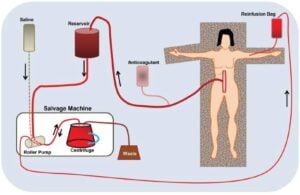
 Intraoperative cell salvage (ICS)—also called intraoperative blood salvage or “cell saver”—is a blood conservation method that collects blood lost during surgery, cleans it, and returns the patient’s own red blood cells back to them.
It is typically considered when substantial blood loss is expected (often over 500 to 1,000 mL or at least 10% to 20% of blood volume) in surgeries such as cardiac, major vascular, orthopedic, obstetric, and trauma procedures.
ICS happens in three main stages:
Collection: Blood is gently suctioned from the surgical site into a reservoir and mixed with an anticoagulant (such as heparinized saline) to prevent clotting.
Blood from surgical sponges may also be rinsed and collected.
Processing: A machine spins the blood in a centrifuge to separate red blood cells from plasma, platelets, anticoagulants, and cellular debris, then washes the red cells with sterile saline.
Reinfusion: The concentrated, washed red blood cells are filtered and transfused back into the patient during or shortly after surgery.
Benefits
Avoids donor blood risks: Using a patient’s own blood lowers the chance of immune reactions, infection, transfusion-related lung injury (TRALI), or wrong-blood errors.
It helps patients with rare blood types, multiple red cell antibodies, or religious/personal objections to allogeneic (donor) blood.
Delivers fresh red cells: Salvaged red cells are not stored long-term and can provide effective oxygen delivery right away.
Risks and Limitations
Loss of clotting factors and platelets as washing removes plasma and platelets, so large-volume blood loss may still require donor plasma, platelets, or clotting factors.
Procedure-related complications: Potential risks include red cell breakdown (hemolysis), air embolism, dilutional coagulopathy, or effects from residual anticoagulant.
Contamination concerns: Bacteria, bowel contents, or tumor cells in the surgical field require careful evaluation and specialized filters or precautions; use in cancer or contaminated surgeries remains selective and debated.
ICS most Is cost-effective when blood loss and returned red cell volumes are substantial.