
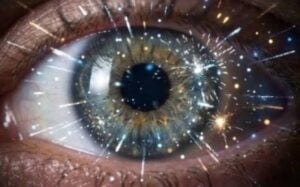
 Photopsia is the medical term for seeing flashes, sparks, streaks, or shimmering light when no actual light source is present outside the eye.
It is a symptom rather than a standalone disease, often caused by mechanical pulling on the retina or changes in how the visual system processes signals.
Common Symptoms
Brief flashes or streaks.
Quick bursts lasting under a second to a couple of seconds, often compared to a camera flash, lightning streak, or arc in side vision.
Shimmering or zig-zag patterns: Expanding, vibrating, or flickering patterns that often last 10 to 30 minutes, commonly linked to migraine auras.
Flashes are frequently more noticeable in dim rooms, in the dark, or when moving your eyes quickly.
Accompanying floaters: Specks, threads, or cobweb shapes drifting across the vision, especially if the vitreous gel inside the eye is tugging on the retina.
Common Causes & Risk Factors
Posterior vitreous detachment (PVD): Age-related shrinkage or separation of the eye’s gel-like vitreous from the retina.
Risk rises notably after age 50.
Retinal tears or detachment: When tugging tears or pulls the retina away from its normal position, risking permanent vision loss if untreated.
Migraine aura: Neurological visual disturbances that can occur with or without a headache.
Eye or head injury: Blunt trauma, concussions, or prior eye surgery that puts mechanical stress on the eye or visual pathways.
Other eye or neurological conditions: Age-related macular degeneration (AMD), optic nerve inflammation (optic neuritis), blood flow changes, or visual processing strain.
Seek same-day or emergency eye care if photopsia is new, suddenly increases, or occurs with any of these warning signs:
A sudden shower of new floaters or a sudden increase in floaters. A dark shadow, gray veil, or “curtain” spreading over part of your vision. Sudden blurry vision, vision loss, or severe eye pain. Recent eye or head trauma.
For most people, treatment focuses on the underlying cause—ranging from monitoring a stable vitreous detachment to medication for migraines or laser/surgical repair for retinal tears or detachment.
Age-related vitreous changes cannot be reliably prevented, though wearing protective eyewear during high-risk sports or activities helps prevent trauma-related flashes.