
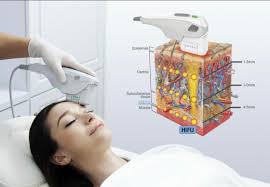
High-intensity focal ultrasound (HIFU), also known as high-intensity focused ultrasound, is a non-invasive therapeutic technique that uses focused ultrasound waves to ablate or destroy targeted tissue deep within the body without damaging surrounding structures.
HIFU works by concentrating ultrasound energy on a small, precise area, raising the temperature at the focal point to induce thermal ablation/coagulative necrosis or, at certain frequencies, mechanical disruption via cavitation or histotripsy.
Mid-frequency systems (around 650 kHz) primarily produce thermal ablation, while lower frequencies (around 220 kHz) can achieve ablation through cavitation effects.
HIFU is used for the treatment of various solid tumors (e.g., prostate, liver, kidney, breast, pancreas, uterine fibroids) and certain neurological disorders. It is guided by imaging modalities such as MRI or ultrasound to ensure precise targeting and real-time monitoring.
The procedure is typically performed extracorporeally, meaning the ultrasound source is placed outside the body, and does not require insertion of probes into the tissue, which distinguishes it from other ablation techniques.
High-intensity focal ultrasound is a rapidly evolving, non-invasive modality for targeted tissue ablation and other therapeutic applications, with expanding indications in oncology, neurology, and beyond.
Main Clinical Uses
Prostate cancer Widely approved and used
Whole-gland or focal therapy; good cancer control with fewer side effects than surgery/radiation.
Uterine fibroids
Excellent symptom relief, preserves uterus
Essential tremor
MR-guided focused ultrasound (MRgFUS) ablates part of thalamus
Tremor-dominant Parkinson’s
Pain from bone metastases Palliative, very effective for cancer bone pain
Liver tumors Often combined with TACE
Pancreatic cancer Used mostly for palliation
Breast cancer/early stage Cosmetic results can be excellent
Brain tumors:requires opening skull or new implantable devices
Kidney tumors Partial nephrectomy alternative in select cases
Thousands of ultrasound beams from a transducer converge on a focal point .
Temperature at the focus instantly hits 60–85 °C leads to protein denaturation and cell death (thermal ablation.
MRI or ultrasound imaging guides and monitors temperature in real time.
Uses no incisions, no radiation.
Outpatient or 1-night stay
Very quick recovery
Can be repeated if needed
Limitations:
Not all tumors are accessible
Expensive equipment
Long treatment times for large volumes in hours
Risk of skin burns, nerve injury if beam path is wrong
Medical HIFU is now a mainstream option for prostate cancer, fibroids, and essential tremor, and it’s rapidly expanding into other cancers and neurological diseases.
It’s one of the few technologies that can treat areas like the brain that were previously almost unreachable without open surgery.