
 Hereditary transthyretin amyloidosis with polyneuropathy (ATTRv-PN) is an autosomal dominant, progressive, multisystem disease caused by pathogenic variants in the transthyretin (TTR) gene, leading to extracellular deposition of amyloid fibrils in peripheral nerves and other organs.
Hereditary transthyretin amyloidosis with polyneuropathy is a treatable, but often underdiagnosed, adult-onset systemic amyloidosis characterized by progressive peripheral and autonomic neuropathy due to TTR gene mutations and amyloid deposition.
ATTRv-PN results in a sensorimotor and autonomic polyneuropathy, often accompanied by cardiac, renal, and ocular involvement.
The disease mechanism i caused by destabilization of the TTR tetramer, dissociation into monomers, and misfolding into amyloid fibrils, which deposit in tissues.
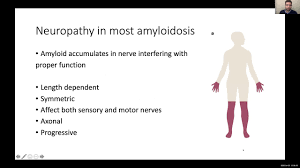
Neuropathy in ATTRv-PN typically presents as a rapidly progressive, length-dependent axonal polyneuropathy.
There is early involvement of small fibers and autonomic dysfunction with orthostatic hypotension, gastrointestinal symptoms, carpal tunnel syndrome and cardiac manifestations with restrictive cardiomyopathy, arrhythmias being common comorbidities.
Clinical presentation varies by the TTR mutation, age at onset, and geography, but most patients develop progressive disability, loss of ambulation, and reduced quality of life.
Median survival after onset of polyneuropathy is 4–17 years, but is shorter with significant cardiac involvement.
Diagnosis relies on clinical suspicion, family history, nerve conduction studies, tissue biopsy, and genetic testing.
Early recognition is critical, because modifying therapies—including TTR stabilizers (tafamidis, diflunisal), TTR gene silencers (patisiran, inotersen), and investigational gene-editing approaches—can slow progression and improve outcomes.
A single administration of nex-z to patients with ATT TR-PN is associated with rapid, deep and durable reductions in serum TTR levels supporting the use of nex-z (Nexiguran Ziclumeran) gene editing treatment.