
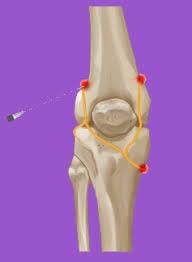
 A genicular nerve block is a targeted peripheral nerve block in which local anesthetic, often with or without corticosteroid, is injected around the sensory branches of the genicular nerves that innervate the knee joint.
The procedure is typically performed under ultrasound guidance to accurately target the superomedial, superolateral, and inferomedial genicular nerves, and sometimes additional branches, at their periosteal entry points near the femoral and tibial epicondyles.
Useful to treat chronic pain, or provide regional anesthesia after knee surgery
Since it targets only sensory branches, the quadriceps muscle is preserved.
The block provides motor-sparing analgesia, as the genicular nerves are predominantly sensory, thus preserving quadriceps strength and facilitating early mobilization.
Genicular nerve is composed of branches of femoral nerve, obturator nerve, sciatic nerve with significant anatomic variance.
Genicular nerve is broken into 4 quadrants in the anterior knee: Superomedial branch Superolateral branch Inferolateral branch Inferomedial branch
They provide sensory innervation only, no motor innervation.
This procedure can not be safely or reliably performed by landmark guidance.
Used for:
The primary clinical indications are for pain management in knee osteoarthritis and for perioperative analgesia following total knee arthroplasty.
Chronic Knee Pain Severe Knee Osteoarthritis Total Knee Arthroplasty Postoperative Knee Pain
Contraindications
Anaphylaxis to injectates Overlying cellulitis, skin lesion or systemic infection
Relative contraindications: Can be treated with less invasive means Hyperglycemia or poorly controlled diabetes Lack of symptom improvement with previous injection
In chronic knee osteoarthritis, genicular nerve block has demonstrated short-term improvements in pain and function, with effects lasting up to several weeks to months: routine use is not universally recommended due to study heterogeneity and limited long-term data.
These procedures do not address the underlying structural pathology of the joint.
Typical injected volumes are 1–3 mL per targeted nerve, using local anesthetic (e.g., bupivacaine or lidocaine), with or without corticosteroid.
The procedure is generally well tolerated, with minimal reported adverse effects.