
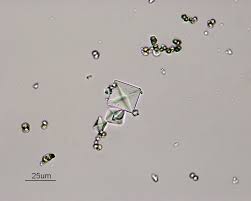
 Calcium oxalate is a chemical compound made of calcium and oxalate ions.
Formula: CaC₂O₄
It exists in several crystalline forms (monohydrate, dihydrate, trihydrate).
It is Insoluble in water, which is why it tends to deposit in tissues.
Can crystallize in urine when concentrations of calcium and oxalate become too high.
Kidney stones: Calcium oxalate crystals are the most common cause of kidney stones (about 70–80% of cases).
Urinary crystals: Seen on urinalysis as envelope-shaped crystals (dihydrate) or dumbbell-shaped (monohydrate).
Risk factors: high oxalate diet-spinach, rhubarb, beets, nuts, chocolate, tea, low fluid intake, hypercalciuria, metabolic disorders.
Prevention: hydration, dietary modifications by lowering oxalate intake, balancing calcium intake and sometimes with medications thiazides, citrate.
Many plants (e.g., spinach, rhubarb, taro) produce calcium oxalate crystals.
Can deposit in tissues in people with high oxalate levels, as in primary hyperoxaluria or advanced kidney disease.
Can damage kidneys by crystal nephropathy.
Plants use it to regulate calcium levels and deter herbivores as the crystals can cause irritation.