
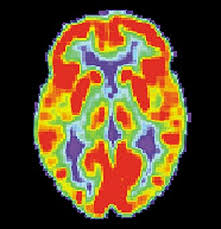
 Positron emission tomography (PET) of the brain provides structural imaging and molecular imaging of functional and biochemical processes including glucose metabolism, neurotransmitter systems, receptor binding, blood flow, and pathologic protein deposition.
Brain PET offers unique diagnostic and prognostic information beyond structural imaging.
PET scans images are not as detailed the CT or MRI and is used most as a complementary test to provide information about whether an abnormal area seen on other imaging tests are likely to be tumors.
PET is more likely to be helpful in identifying high grade tumors, than low-grade tumors.
The most widely used tracer is [18F]fluorodeoxyglucose (FDG), which measures regional glucose metabolism and has established clinical applications in several neurological conditions.
FDG-PET demonstrates characteristic hypometabolic patterns in dementias—particularly the distinctive parietal, temporal, and frontal association cortex hypometabolism in Alzheimer’s disease while sparing primary motor and visual cortex.
This pattern differs from multi-infarct dementia and other neurodegenerative conditions.
In epilepsy, FDG-PET reveals interictal hypometabolism in seizure foci, making it invaluable for presurgical evaluation in patients with medically refractory complex partial epilepsy, particularly temporal lobe epilepsy.
Approximately half of medication-refractory patients can undergo noninvasive evaluation for temporal lobectomy using PET.
PET distinguishes high-grade gliomas (which show hypermetabolism) from post-radiation necrosis, avoiding unnecessary neurosurgical procedures.
In movement disorders, tracers assess dopaminergic function: [18F]fluorodopa reveals presynaptic dopaminergic terminal loss in Parkinson’s disease and progressive supranuclear palsy, while raclopride demonstrates D2 receptor changes.
FDG-PET shows caudate and putamen hypometabolism in Huntington’s disease.
Amyloid PET tracers like florbetapir estimate amyloid beta neuritic plaque density in adults with cognitive impairment, aiding evaluation of Alzheimer’s disease and selection of patients for amyloid-directed therapies.
Novel tracers for neuroinflammation (TSPO ligands), tau protein, and other neurotransmitter systems continue to expand PET’s diagnostic capabilities.