
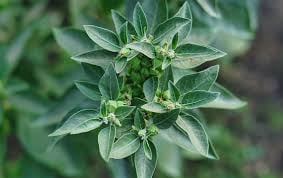
 Ashwagandha is a perennial shrub of the Solanaceae family, native to India, the Middle East, and parts of Africa
It is cultivated globally for its medicinal properties.
The root is the primary part used, though leaves and berries also contain bioactive compounds.
The plant’s pharmacological activity is attributed to a diverse array of phytochemicals, most notably withanolides as well as alkaloids, saponins, flavonoids, phenolic acids, and sitoindosides.
The root is particularly rich in withanolides and alkaloids, while the leaves contain additional phenolic and flavonoid compounds.
Ashwagandha exhibits adaptogenic, anti-inflammatory, antioxidant, neuroprotective, immunomodulatory, anti-cancer, anti-diabetic, cardioprotective, and anxiolytic effects.
Its adaptogenic and anti-stress actions are mediated by modulation of the hypothalamic-pituitary-adrenal (HPA) axis, resulting in reduced cortisol levels and improved resilience to stress.
Neuroprotective effects involve mitigation of oxidative stress, reduction of neuroinflammation, and enhancement of mitochondrial function, with modulation of GABAergic, serotonergic, and dopaminergic neurotransmission.
Anti-inflammatory activity is mediated by inhibition of pro-inflammatory cytokines (TNF-α, IL-6), suppression of NF-κB activation, and reduction of leukotriene synthesis.
Antioxidant effects are due to free radical scavenging and upregulation of endogenous antioxidant enzymes.
Ashwagandha’s anti-cancer properties are linked to withanolides that induce apoptosis, inhibit angiogenesis, and modulate tumor suppressor genes.
Metabolic and cardioprotective effects include improved insulin sensitivity, reduced fasting glucose, favorable lipid modulation, and attenuation of ischemia/reperfusion-induced apoptosis.
The most robust clinical evidence for Ashwagandha pertains to its efficacy in reducing stress and anxiety.
Systematic reviews and meta-analyses of randomized controlled trials (RCTs) have demonstrated significant reductions in perceived stress and anxiety scores.
Ashwagandha supplementation reduced anxiety and stress compared to placebo, with a dose-response effect for stress reduction at 300–600 mg/day and for anxiety up to 12,000 mg/day: the certainty of evidence was rated as low due to heterogeneity.
Reductions in Perceived Stress Scale (PSS) scores are related to modulation of the HPA axis, as a likely mechanism.
Additional RCTs using 240–500 mg daily for 60–90 days have shown improvements in validated anxiety scales and reductions in salivary cortisol.
Studies consistently report good tolerability and no serious adverse events.
A systematic review and meta-analysis of five RCTs (n=400) found that Ashwagandha extract produced a small but statistically significant improvement in overall sleep quality, with more pronounced effects in adults with insomnia, at doses ≥600 mg/day and treatment durations ≥8 weeks.
Another meta-analysis of five RCTs (n=254) demonstrated significant improvements in sleep onset latency, total sleep time, sleep efficiency, and Pittsburgh Sleep Quality Index (PSQI) scores.
A double-blind RCT showed significant improvements in sleep parameters and mental alertness in both healthy and insomnia subjects after 8 weeks of Ashwagandha root extract supplementation.
The most commonly studied doses for sleep range from 300 mg to 600 mg daily, with some studies using lower doses (125 mg) and still observing benefit.
Evidence for Ashwagandha’s cognitive benefits is promising but less robust.
A systematic review identified five clinical studies, including RCTs in older adults with mild cognitive impairment and adults with psychiatric disorders, that reported improvements in cognitive tasks, executive function, attention, and reaction time following Ashwagandha supplementation.
In healthy, stressed adults, a 90-day RCT using 300 mg sustained-release Ashwagandha root extract demonstrated significant improvements in recall memory, pattern recognition, and total error rate on the Cambridge Neuropsychological Test Automated Battery (CANTAB), as well as reductions in stress and improvements in sleep quality and psychological well-being.
These studies suggest a potential role for Ashwagandha in cognitive enhancement, with minimal side effects reported.
A double-blind, placebo-controlled pilot study in adults with overweight and obesity found that 500 mg daily Ashwagandha supplementation for 40 days produced significant reductions in serum triglycerides and VLDL cholesterol, though no significant changes were observed in body weight, BMI, or waist circumference.
Studies in animal models of type 2 diabetes mellitus have demonstrated anti-inflammatory, antioxidant, and glucose-regulating properties, including improved insulin sensitivity and reduced systemic inflammation.
Clinical data in humans with diabetes or metabolic syndrome are lacking.
Ashwagandha is generally well tolerated in healthy adults, with mild and transient adverse effects predominating in clinical studies.
The most frequently reported adverse effects were somnolence, epigastric discomfort, and loose stools, each occurring in more than 5% of subjects.
Less common effects included giddiness, drowsiness, vertigo, nasal congestion, cough, decreased appetite, nausea, constipation, dry mouth, hyperactivity, nocturnal cramps, blurring of vision, hyperacidity, skin rash, and weight gain.
No serious adverse events or clinically significant changes in hematological, biochemical, or vital parameters were reported in these studies.
There is a growing body of case reports documenting herb-induced liver injury (HILI) associated with Ashwagandha supplementation.
The clinical phenotype is typically cholestatic or mixed hepatocellular-cholestatic, presenting with jaundice, pruritus, nausea, lethargy, and abdominal discomfort after a latency of 2–12 weeks of use.
Laboratory findings include elevations in bilirubin, ALT, AST, ALP, and GGT.
Most cases are self-limited, with normalization of liver tests within 1–5 months after discontinuation, but severe cases have been reported, including acute-on-chronic liver failure and death in patients with underlying chronic liver disease.
One case required liver transplantation.
Ashwagandha should be used with caution in individuals with pre-existing liver disease, and clinicians should maintain a high index of suspicion for HILI in patients presenting with unexplained liver injury who report Ashwagandha use.
There is a low risk of pharmacokinetic interactions with drugs metabolized by these pathways, even in older adults with polypharmacy.
However, the possibility of rare or idiosyncratic interactions cannot be excluded, and clinicians should remain vigilant, particularly in populations with complex medication regimens.
Animal studies demonstrate high tolerability and no significant reproductive toxicity at doses relevant to human consumption, and human clinical studies have not shown adverse effects on thyroid function, hormonal balance, or reproductive health.
Studies are needed to definitively address safety in pregnancy and lactation.
Ashwagandha should generally be avoided in pregnant women due to the lack of robust safety data and the potential for idiosyncratic reactions.
Preclinical studies have not demonstrated mutagenicity or genotoxicity for Ashwagandha; and some evidence suggests protective effects against chromosomal abnormalities induced by clastogenic agents.
Cardiovascular safety concerns have not been substantiated in controlled studies.
Ashwagandha has not been associated with clinically significant changes in thyroid function in human trials.
Ashwagandha is most commonly administered as a root extract, typically standardized to 2.5–5% withanolides.
Formulations include capsules, tablets, powders, and, less commonly, liquid extracts.
The most commonly studied doses in clinical trials range from 125 mg to 700 mg daily of standardized extract, administered once or twice daily for 8–12 weeks.
Lower doses (125–250 mg/day) may be effective, particularly with optimized extracts, while higher doses (up to 700 mg/day) are also well tolerated.
Standardization to withanolide content (typically 2.5–5%) is important for reproducibility and efficacy.
Some formulations include additional bioenhancers, such as piperine, to improve absorption and bioavailability.
Ashwagandha’s efficacy for anxiety and stress is comparable to other leading adaptogens and moderate relative to conventional anxiolytics.
Ashwagandha’s effect sizes for anxiety reduction are moderate and comparable to or slightly lower than those reported for SSRIs and benzodiazepines, but the populations studied are typically individuals with mild to moderate anxiety or stress, rather than those with severe, clinically diagnosed anxiety disorders.
Evidence for Ashwagandha in pediatric populations is limited.
In geriatric populations, clinical trials have demonstrated significant improvements in muscle strength, cardiorespiratory fitness, hormonal balance, skin health, sleep quality, and cognitive function, with good tolerability and minimal side effects.
Ashwagandha is generally well tolerated in older adults, but rare cases of hepatotoxicity have been reported, and caution is warranted in those with pre-existing liver disease.
In patients with multimorbidity or polypharmacy, Ashwagandha demonstrates reasonable efficacy and a generally favorable safety profile in a range of chronic diseases, including cardiovascular, autoimmune, and psychiatric conditions.
It is well tolerated in most patients, with a low risk of drug interactions even in the context of polypharmacy.
There is insufficient evidence to support its use in pregnancy or lactation, and caution is warranted in these populations.
No significant reproductive toxicity, teratogenicity, or genotoxicity has been observed in preclinical or clinical studies.
Ashwagandha is regulated as a dietary supplement in the United States.