
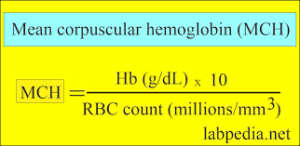
 Mean corpuscular hemoglobin (MCH) is a measure of the average amount of hemoglobin in a single red blood cell.
MCH is a standard part of a complete blood count (CBC) and is one of several red blood cell indices used to diagnose and classify different types of anemia.
MCH results are reported in picograms (pg) per cell.
While specific reference ranges can vary by laboratory, a typical normal range for an adult is 27 to 33 pg.
Low MCH (Hypochromia): Often indicates that red blood cells are smaller than normal or contain less hemoglobin.
Common Causes: Iron deficiency anemia is most common, thalassemia and chronic inflammatory conditions.
Symptoms: Fatigue, weakness, shortness of breath, and pale skin.
High MCH (Hyperchromia): Usually occurs when red blood cells are larger than normal (macrocytosis).
Common Causes: Vitamin B12 or folate deficiency, liver disease, excessive alcohol consumption, and hypothyroidism.
Symptoms: Many people have no symptoms, but some may experience fatigue, memory problems, or numbness/tingling in hands and feet.
Relation to Other Indices
MCV (Mean Corpuscular Volume) Measures the average size of red blood cells.
MCHC (Mean Corpuscular Hemoglobin Concentration) Measures the concentration of hemoglobin relative to the size of the cell.