
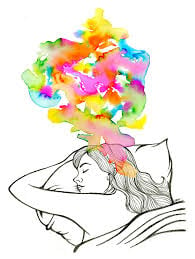
 Oneirology is the scientific study of dreams.
It is an interdisciplinary field drawing from neuroscience, psychology, and sleep medicine.
Oneirology seeks to quantitatively analyze the dreaming process, including how it correlates with brain function, memory formation, and mental disorders.
Unlike dream interpretation—which focuses on symbolic meaning—oneirologists prioritize the physiological and neurological mechanisms of dreaming:
Brain Activity: Focusing on the Rapid Eye Movement (REM) stage of sleep, where most vivid dreaming occurs and the brain shows high activity in the limbic system and amygdala.
It explores the content, structure, and patterns of dreams, and the relationship between dreams and sleep stages (especially REM sleep).
It analyzes the psychological and emotional functions of dreaming
Memory Consolidation: A leading theory suggests dreams help the brain process and integrate new information into long-term memory.
Mental Health: Oneirology explores links between dream patterns and conditions like PTSD often manifesting as nightmares and schizophrenia where delusions may share mechanisms with illusory dreams, to REM sleep behavior disorder, and lucid dreaming)
Authentic Dreaming: Dreams that reflect actual memories and experiences, thought to be a side effect of the brain “rehearsing” or reinforcing neural pathways.
Illusory Dreaming: Bizarre or impossible dreams that may result from errors in memory processing.
Lucid Dreaming: A state where the dreamer becomes aware they are dreaming and may even gain control over the dream’s narrative.
Most vivid dreaming occurs during REM (Rapid Eye Movement) sleep, when brain activity closely resembles the waking state
The amygdala and hippocampus are highly active during dreams, linking dreaming to emotion processing and memory consolidation
Dreams appear to play a role in emotional regulation, problem-solving, and memory processing
On average, people have 4–6 dream episodes per night, though most are forgotten upon waking.
Theories of dream function: Memory consolidation theory — dreams help process and store new information
Threat simulation theory — dreaming evolved as a way to rehearse responses to dangerous situations.
Emotional processing theory — dreams help regulate difficult emotions.
Activation-synthesis hypothesis — dreams are the brain’s attempt to make sense of random neural activity during sleep