
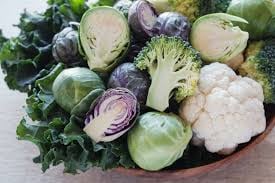
 Cruciferous vegetables are a family of plants.
They’re called cruciferous because their four-petaled flowers form a cross shape.
These vegetables are packed with vitamins C and K, folate, fiber, and antioxidants.
They contain sulfur compounds called glucosinolates, which break down into bioactive compounds like sulforaphane and indole-3-carbinol.
These compounds may have anti-inflammatory and potentially anti-cancer properties.
Cruciferous vegetables tend to have distinctive, slightly bitter or peppery flavors due to these sulfur compounds.
Cruciferous vegetables are a group of nutrient-dense veggies belonging to the Brassicaceae family, including commonly eaten types like broccoli, cabbage, Brussels sprouts, kale, and cauliflower.
The name “cruciferous” comes from the cross-shaped pattern of their flower petals.
Diverse forms, include leafy greens, root vegetables, stem vegetables, and edible flower heads.
Common Types • Broccoli • Cauliflower • Cabbage • Kale • Brussels sprouts • Arugula (rocket) • Bok choy • Collard greens • Watercress • Turnips • Radish • Mustard greens • Kohlrabi • Rutabaga • Daikon/horseradish • Wasabi
Cruciferous vegetables are low in calories and high in fiber, vitamins C, A, K, and E, as well as folic acid, calcium, magnesium, and potassium.
Regular consumption of these vegetables is associated with a reduced risk of many chronic conditions, including some cancers and heart disease.
Their rich fiber content supports digestive health and promotes satiety.
Adults are generally recommended to consume at least 2½ cups of vegetables per day, with cruciferous vegetables making up a healthy component of this quota; 1 cup cooked or 2 cups of raw leafy cruciferous vegetables generally equals a 1-cup serving.
Cruciferous veggies may interact with certain medications (warfarin) due to their vitamin K content and may cause allergic reactions in sensitive individuals.