
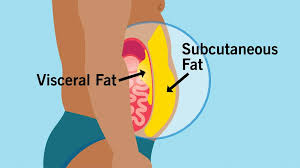
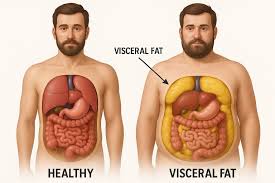
 Visceral fat, also known as intra-abdominal or hidden fat, is the type of body fat stored deep within the abdominal cavity, surrounding internal organs such as the liver, intestines, and pancreas and primarily in the mesentery and omentum.
Visceral fat drains directly into the portal circulation to the liver, distinguishing it anatomically from subcutaneous fat.
Visceral adipose tissue (VAT) is more metabolically active than subcutaneous fat, with greater lipolytic responsiveness, higher cellular density, increased vascularization, and more inflammatory and immune cells.
It contains more glucocorticoid and androgen receptors and demonstrates enhanced sensitivity to adrenergic stimulation.
Unlike subcutaneous fat is the pinchable layer just under the skin.
Visceral fat is not visible externally and wraps around internal organs, providing some cushioning in small amounts but becoming harmful when excessive.
Some visceral fat is normal and even protective in moderation, but excess accumulation is linked to serious health issues.
People with high visceral fat often have an “apple-shaped” body/central obesity, where fat concentrates around the midsection rather than hips/thighs/pear-shaped.
Visceral fat is metabolically active, releasing inflammatory substances like cytokines, free fatty acids, and hormones that disrupt normal body functions.
This leads to: Increased risk of heart disease and stroke.
Type 2 diabetes and insulin resistance.
High cholesterol and metabolic syndrome.
Certain cancers, fatty liver disease, and inflammation-related conditions.
Other issues like Alzheimer’s, dementia, and hormonal imbalances.
Even people with a normal BMI can have high visceral fat, elevating these risks.
Waist circumference: >40 inches (102 cm) in men or >35 inches (88 cm) in women indicates higher risk.
Waist-to-hip ratio: Higher ratios suggest more visceral fat.
CT/MRI scans can provide accurate measurements.
Visceral fat responds well to lifestyle changes, often faster than subcutaneous fat.
Exercising regularly: Aim for 150+ minutes/week of moderate activity-brisk walking, cycling plus strength training.
Aerobic exercise and high intensity interval training are especially effective at targeting visceral fat.
Healthy diet: Focus on whole foods—vegetables, fruits, lean proteins, whole grains. Reduce added sugars, refined carbs, trans fats, and excessive calories. Low-carb diets may help more than low-fat for some.
Maintain a calorie deficit for weight loss, if overweight, but sustainably.
Manage stress and sleep: High cortisol from stress promotes visceral fat; aim for 7-9 hours of quality sleep.
Limit alcohol and avoid smoking.
Visceral fat can decrease significantly with these habits, lowering health risks even without massive weight loss.
Excess VAT is strongly associated with insulin resistance, type 2 diabetes, atherogenic dyslipidemia, hypertension, and increased cardiovascular risk.
Individuals with identical waist circumferences can have dramatically different visceral fat accumulation:
At any given BMI, there is substantial individual variation in visceral fat accumulation—up to 2- to 3-fold differences—which explains why some individuals with obesity have favorable metabolic profiles while others at the same BMI face high cardiometabolic risk.
Measuring waist circumference in addition to BMI can help identify patients with excess visceral adiposity who require more intensive cardiometabolic risk management.
.