
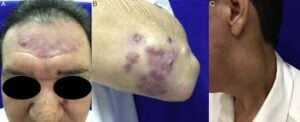
 Tertiary syphilis is a rare, severe, and non-contagious stage of syphilis that develops in 30-40% of untreated cases, typically 10 to 30 years after the initial infection.
Tertiary syphilis is the late stage of Treponema pallidum infection, occurring years to decades after the initial infection if left untreated.
While it can be cured with antibiotics, it causes permanent damage to vital organs like the brain, nerves, and heart.
When untreated bacteria (Treponema pallidum) progress to the tertiary stage, the body’s severe inflammatory response causes devastating damage to different organ systems:
Neurosyphilis: Affects the brain and spinal cord. It can lead to severe headaches, meningitis, muscle weakness, dementia, stroke, and tabes.
Cardiovascular Syphilis: Attacks the heart and major blood vessels. It often causes syphilitic aortitis which can lead to aneurysms or heart valve failure.
Syphilitic sotitis estimated to current 10% of patients with tertiary syphilis and cardiovascular complications may include aortic value insufficiency, aortic aneurysm, coronary ostial stenosis, myocardial ischemia, and infarction, and congestive heart failure.
Gummatous Syphilis: Characterized by the formation of gummas—large, rubbery, tumor-like sores that can appear on the skin, bones, joints, and internal organs, causing tissue destruction.
Diagnosis Because tertiary syphilis can mimic autoimmune disorders and varies greatly by patient.
Serology: Both treponemal and non-treponemal tests are used to detect syphilis antibodies.
Cerebrospinal Fluid (CSF) Examination: A lumbar puncture is required to test for neurosyphilis.
Diagnosis: Serology (RPR/VDRL + confirmatory treponemal test).
For neurosyphilis, CSF-VDRL is specific but insensitive; CSF pleocytosis and elevated protein support the diagnosis.
Treatment While tertiary syphilis can be cured with antibiotics, the treatment cannot reverse the permanent damage already done to the organs.
Standard Treatment: Administered as weekly benzathine penicillin G injections for three consecutive weeks.
High-dose IV penicillin G (aqueous crystalline) for neurosyphilis and cardiovascular involvement; benzathine penicillin IM for gummatous disease.
Treatment halts progression but doesn’t reverse existing structural damage.
Neurosyphilis Regimen: If the infection has spread to the brain or spinal cord, patients receive high-dose intravenous penicillin for 10 to 14 days.
Typically develops 3–15+ years after primary infection, though not everyone with untreated syphilis progresses to this stage.
Main manifestations:
Gummatous syphilis — Granulomatous lesions (gummas) that can form in skin, bone, or visceral organs.
These are destructive but respond well to treatment.
Cardiovascular syphilis — Affects the aorta, causing aortitis, aortic root dilation, aortic regurgitation, or coronary ostial stenosis.
The ascending aorta is classically involved.
Neurosyphilis — Can occur at any stage but is a major feature of tertiary disease. Includes tabes dorsalis (posterior column degeneration → ataxia, lancinating pains, Argyll Robertson pupils, loss of proprioception) and general paresis (progressive dementia, personality changes, psychiatric symptoms).