
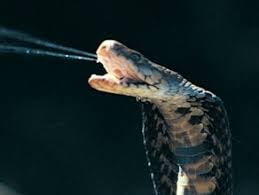
 Snake venoms are complex biological agents containing hundreds of different proteins, enzymes, and other molecules that serve various purposes for the snake.
Enzymes make up a large portion of most venoms:including: Hyaluronidase helping the venom spread through tissues Phospholipase A2 that breaks down cell membranes Metalloproteinases thatbreak down proteins and tissues Acetylcholinesterase that affects nerve transmission
Toxins target specific body systems: Neurotoxins affecting the nervous system. Cytotoxins that destroy cells and tissues Hemotoxins that affect blood and circulation Myotoxins thatdamage muscle tissue
Hemotoxic venoms manifest as Internal bleeding Tissue destruction Circulatory shock Coagulation disorders
Neurotoxic venoms target the nervous system, causing: Paralysis Respiratory failure Muscle weakness Altered consciousness
Cytotoxic venoms cause severe local tissue damage, necrosis, and cell death.
Venom composition varies by symptom presentation, treatment and antivenom effectiveness.
The severity of envenomation depends on the amount of venom injected, the victim’s size and health, and how quickly treatment is received.
Antivenoms are life-saving medications that neutralize snake venom toxins: Antivenoms are used to treat venomous bites or stings—most commonly from snakes, spiders, scorpions, and marine animals like jellyfish or stonefish.
Antivenoms contain antibodies that bind to and neutralize venom toxins.
These antivenom antibodies are typically produced by immunizing horses, sheep, or other animals with small, gradually increasing doses of snake venom: animals develop immunity and produce antibodies, which are then harvested from their blood and purified.
Monovalent antivenoms are specific to one snake species and tend to be highly effective against that particular venom.
Polyvalent antivenoms work against multiple snake species from the same region or family.
Fab and F(ab’)2 fragments use only the active antibody portions, potentially reducing allergic reactions compared to whole antibody preparations.
Different regions require different antivenoms based on local snake populations: North America: CroFab and ANAVIP for pit vipers Australia: Polyvalent snake antivenom covering major Australian species Africa: Various regional antivenoms for species like black mambas, puff adders, and carpet vipers Asia: Multiple products for cobras, kraits, Russell’s vipers, and saw-scaled vipers
Antivenoms must be given intravenously in hospital settings with careful monitoring.
Antivenom sensitivity effectiveness decreases significantly with delayed treatment, especially for neurotoxic bites.
Allergic reactions – some patients develop severe reactions to foreign proteins in antivenom.
Serum sickness with delayed immune response: fever, rash, joint pain may occur.