
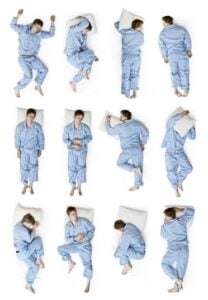
 The primary sleeping positions are side sleeping, back sleeping, and stomach sleeping, each carrying distinct pros and cons for health and spinal alignment.
Side Sleeping (Lateral)
Popularity: The most common sleeping position, used by over 60% of adults.
Benefits: Reduces snoring and obstructive sleep apnea (OSA), helps improve circulation, and eases acid reflux or GERD (especially when sleeping on your left side).
Side—left or right | Snoring and positional obstructive sleep apnea; often comfortable for back pain Keep your head aligned with your trunk using an appropriately thick pillow; place a pillow between your knees.
Drawbacks: Can place direct pressure on your shoulders and hips, potentially leading to joint stiffness.
How to Optimize: Place a supportive pillow between your knees and ankles to keep your hips and spine aligned.
Back Sleeping (Supine)
Popularity: Natural for many and great for neutral spinal alignment. Benefits: Keeps your head, neck, and spine in a neutral line, which helps prevent daytime aches and pains and significantly reduces acid reflux.
Variations include the soldier (arms at sides) and starfish (arms and legs spread out).
Drawbacks: Gravity pulls the tongue and soft tissues back into the throat, which can worsen snoring and sleep apnea.
How to Optimize: Place a small pillow or bolster under your knees to support the natural curve of your lower back.
Stomach Sleeping (Prone)
Popularity: The least common position
Benefits: Can sometimes help decrease snoring.
Drawbacks: Considered the least ergonomic option. It forces your neck into a sharp rotation and can flatten the natural curve of your spine, leading to lower back and neck strain.
Use a very thin pillow (or no pillow under your head) and place a flat pillow under your pelvis or lower stomach to reduce lower back sag.
For adults, there is no single best sleep position: side-sleeping is a useful starting point, especially for snoring or reflux, while back-sleeping may be more comfortable for some people with musculoskeletal pain.
Comfort, breathing, and neutral spinal alignment matter more than maintaining one position all night.
Positions and trade-offs
Left side Particularly useful for nighttime GERD/heartburn Left-side sleeping generally reduces reflux compared with right-side sleeping.
Back—supine May relieve low-back pain and avoid pressure on a painful shoulder Can worsen snoring and obstructive sleep apnea. A pillow beneath the knees may improve comfort.
Stomach—prone May reduce snoring in some people
Usually less favorable for neck and back comfort because the head stays rotated.
If this is your preferred position, a thin head pillow—or none—may reduce strain.
Upper body elevated nMay help people whose breathing is uncomfortable lying flat
An adjustable bed or supported incline can help, but the underlying breathing problem still needs assessment.
For uncomplicated sleep: choose whichever side or back position is comfortable and keeps your neck relatively neutral; normal repositioning overnight is expected.
For snoring or sleep apnea: favor your side rather than your back.
Position can help, but should not be assumed to adequately treat diagnosed apnea.
For pregnancy: side-sleeping is generally advised, especially later in pregnancy.
For infants: the advice is different—always place babies on their backs to sleep to reduce SIDS risk.