
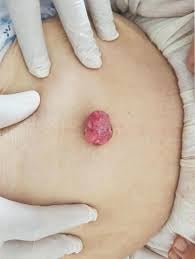
 Metastatic cancer to the umbilicus typically associated with cancers of the gastrointestinal tract and ovary.
Sister Mary Joseph nodule is a malignant tumor in the navel that indicates an advanced, metastatic cancer.
It typically originates from gastrointestinal or gynecologic cancers, such as colon, stomach, pancreatic, or ovarian tumors.
It is a rare physical sign and carries a poor prognosis.
The nodule typically looks like a small, hard, or ulcerated bump in the belly button.
It may be smooth or rough, and ranges in color from flesh-toned to bluish-purple, white, or reddish-brown.
The lump is often painless, though it may itch, bleed, or ooze.It indicates advanced cancer, patients may also experience unexplained weight loss, nausea, abdominal pain, or changes in bowel habits.
The nodule occurs when cancer cells from a primary tumor in the abdomen or pelvis travel to the umbilicus via the lymphatic system, blood vessels, or surrounding embryonic ligaments.
Gastrointestinal Cancers account for approximately 50% of cases.
Most commonly stomach cancer, colon cancer, and pancreatic cancer.
Gynecologic Cancers account for approximately 25% of cases: Primarily ovarian cancer and uterine cancer.
Unknown Primary: In a minority of cases, the originating cancer cannot be located (carcinoma of unknown primary).
Diagnosis Medical Imaging: CT scans or ultrasounds of the abdomen and pelvis to locate the primary tumor.
Biopsy: Fine-needle aspiration or a surgical tissue sample of the umbilical nodule to confirm the diagnosis.
Treatment and Prognosis Discovering a Sister Mary Joseph nodule generally signifies a grim prognosis, as it indicates the cancer is at an advanced stage.
Treatment is typically palliative, to manage symptoms, extend survival, and improve quality of life rather than achieve a cure.
Treatment strategies often involve systemic chemotherapy.
In some specific cases, radiation therapy or surgery might be utilized.