
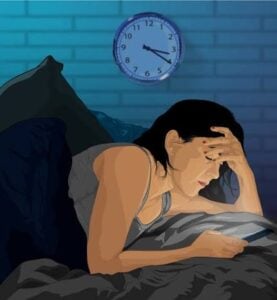
 Revenge bedtime procrastination (RBP) is the decision to sacrifice sleep for leisure time, occurring when people with high-stress or low-control daytime schedules stay up late to regain a sense of freedom.
Revenge Bedtime Procrastination (RBP) is the desire to stay awake at night to catch up on free time that was missed during the day.
A genuinely important and increasingly recognized behavioral pattern with real health consequences.
This phenomenon results in sleep deprivation and fatigue, often involving compulsive screen time, as a “revenge” against a lack of daytime autonomy.
Revenge bedtime procrastination refers to the practice of deliberately staying up late — browsing phones, watching TV, scrolling social media — not out of necessity, but as a way to reclaim personal time after a long, demanding day with little autonomy.
It is the psyche’s quiet act of “revenge” against a busy, controlled daytime schedule.
Cause: A, lack of free time or excessive workload, making people feel the need to compensate for lost time, often prevalent in demanding jobs or during pandemic work-from-home scenarios.
Behavior: Procrastinating going to bed, or staying awake once in bed, usually engaging in mindless browsing, gaming, or entertainment.
Consequences: Chronic sleep deprivation, fatigue, lower energy levels, and potential long-term health risks like obesity or depression.
It is common for people with ADHD to experience this, often feeling entitled to me time only after others are asleep.
How to Reduce It: Establish a Routine: Develop a strict, calming pre-bedtime routine that prepares you for sleep, rather than stimulating you.
Protect Daytime Downtime: Set boundaries during the day to avoid burnout, ensuring you do not feel fully deprived of free time by the evening.
Validate the underlying need for autonomy and decompression.
Build micro-recovery periods during the day so the need for nighttime revenge diminishes
Address the root cause: workload, lack of boundaries, emotional exhaustion
Limit Electronics: Avoid screens at least 30 minutes before bed.
Set Time Limits:
Keeping a consistent bedtime and wake-up time, including on non-working days.
Avoiding alcohol or caffeine late in the afternoon.
RBP is strongly associated with chronic sleep deprivation, even in people who know better and genuinely want more sleep.
It is prevalent in healthcare workers, caregivers, parents of young children, and anyone with high daytime cognitive/emotional load.
Chronic short sleep (<6 hours) is independently linked to hypertension, obesity, insulin resistance, impaired immune function, depression, and increased cardiovascular mortality.
It is rooted in psychological reactance — when people feel their autonomy is restricted during the day, the brain seeks to compensate at night.
The behavior is not laziness; it is an emotional regulation strategy that comes at a physiological cost.