
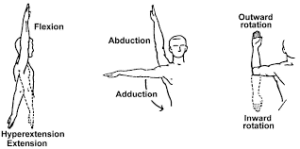
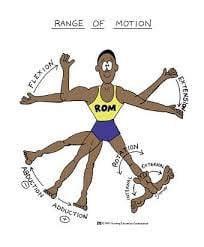
 Range of motion (ROM) refers to the measurement of the distance and direction a joint can move between its flexed and extended positions.
Range of motion (ROM) is the amount of movement a joint can achieve in a given direction, usually measured in degrees and used as an indicator of joint flexibility and function.
ROM is a critical indicator of joint health, flexibility, and functional mobility used to assess injuries or track recovery progress.
Factors That Affect ROM Age Injury or inflammation Muscle tightness or weakness Joint disease (e.g., osteoarthritis) Scar tissue or surgery
Good ROM allows efficient, pain‑free movement for daily activities like reaching overhead, bending, walking, and squatting.
Reduced or excessive ROM is associated with pain, dysfunction, and higher injury risk.
ROM indicates joint health and flexibility Used to assess injury, arthritis, post-surgical recovery Guides physical therapy and rehabilitation Affects athletic performance and daily function
ROM is the distance and direction a joint can move between its fully bent (flexed) and fully straight (extended) positions, and in other planes like rotation, abduction, and adduction depending on the joint.
Types of Range of Motion are categorized into three distinct types based on who is performing the movement.
Active Range of Motion (AROM) moving the joint using one’s own muscles without any outside help, which shows muscle strength and coordination.
Passive Range of Motion (PROM): An outside force, such as a physical therapist or a Continuous Passive Motion (CPM) machine, moves the joint while the muscles stay relaxed.
PROM is often greater than AROM because it isn’t limited by one’s own muscle contraction.
Active-Assistive Range of Motion (AAROM): Moving the joint as much as one can, and a therapist or equipment helps you complete the rest of the movement.
ROM is measured in degrees using a tool called a goniometer.
While normal ROM varies by age and sex.
Shoulder Abduction (lift to side)~180° Elbow Flexion (bending) ~150° Knee Flexion (bending) 133° – 153° Hip Flexion (knee to chest) 120° – 135° Ankle Dorsiflexion (toes up) 12° – 20° Cervical spine|Rotation 0–80° each side
Good ROM allows one to perform basic tasks like reaching for a shelf, tying your shoes, or climbing stairs.
Conditions such as arthritis, muscular contractures, neurologic injury, or tendon/ligament damage commonly limit ROM.
Injury Prevention: Joints that move freely are less likely to suffer from strains or sprains.
Pain Management: Improving ROM can reduce stiffness and the discomfort associated with conditions like arthritis.
Performance: Athletes require full ROM for maximum muscle recruitment and power.
Limited range of motion can be caused by swelling, pain, muscle stiffness, or medical conditions like arthritis.
ROM measurements are often tracked over time in rehabilitation to monitor progress or response to therapy.
Improving ROM Stretching Foam rolling / myofascial release Strengthening surrounding muscles Physical or occupational therapy Warm-up before activity