
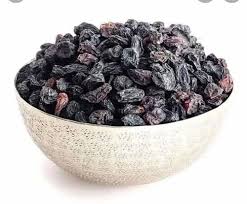
A raisin is a dried grape.
Raisin varieties depend on the types of grapes used and appear in a variety of sizes and colors, including green, black, brown, purple, blue, and yellow.
Raisins are traditionally sun-dried but may also be artificially dehydrated.
Golden raisins are created with a treatment of sulfur dioxide rather than purely drying them.
They are sometimes dried in dehydrators with controlled temperature and humidity, which may allow them to retain more moisture.
For a grape berry to dry, water inside the grape must be removed completely from the interior of the cells,
The physical and chemical mechanisms located on the outer layers of the grape are adapted to prevent water loss, and require three steps to commercial raisin production including pre-treatment, drying, and post-drying processes.
Pre-treatment is a necessary step in raisin production to ensure the increased rate of water removal during the drying process.
The three types of drying methods are: sun drying, shade drying, and mechanical drying.
Sun drying is an inexpensive process; however, environmental contamination, insect infections, and microbial deterioration can occur.
Mechanical drying can be done in a safer and more controlled environment where rapid drying is guaranteed.
One type of mechanical drying is to use microwave drying.
After the drying process is complete, they are cleaned with water to remove any foreign objects that may have become embedded.
The washing process may cause rehydration, so another drying step is completed after washing to ensure that the added moisture has been removed.
Sometimes sulfur dioxide is applied to raisins after the pre-treatment step and before drying to decrease the rate of browning caused by the reaction between polyphenol oxidase and phenolic compounds.
Sulfur dioxide also helps to preserve flavor and prevent the loss of certain vitamins during the drying process.
Nutritional value per 100 g (3.5 oz) Energy 299 kcal (1,250 kJ) Carbohydrates 79.3 g Sugars 65.2 g Dietary fiber 4.5 g Fat 0.25 g Protein 3.3 g Vitamins and minerals Water 15.5 g
Raisins are 15% water, 79% carbohydrates including 4% fiber and 3% protein, and contain negligible fat.
In a reference amount of 100 grams (3.5 oz), raisins supply 299 kilocalories and moderate amounts (10–19% DV) of riboflavin, vitamin B6, and several dietary minerals rich in content (above 20% DV), including potassium and copper.
Raisins can cause kidney failure in both cats and dogs.
Raisins offer notable health benefits due to their fiber, potassium, antioxidants, and other micronutrients, but they are also high in natural sugars and calories, so moderation is recommended for optimal health.
Raisins may reduce heart disease risk, partly because their potassium and antioxidants help decrease blood pressure.
Their fiber content supports digestive health and regularity, while tartaric acid may balance gut bacteria and reduce inflammation.
Raisins offer some protection against dental plaque and cavities thanks to antibacterial compounds, despite their stickiness.
As a good source of iron, raisins can help reduce the risk of anemia and support healthy blood cell formation.
Phytonutrients in raisins, including polyphenols, offer antioxidant benefits that may lower inflammation and protect cells from damage.
Typical values per 1 cup of raisins
| Nutrient | Amount |-—————|———————| Energy 493 kcal Sugar 97.7 g Protein 5.07 g Fiber 6.1 g Potassium 1235.85 mg Iron 3.1 mg Calcium 82.5 mg
Raisins are relatively high in sugar and calories.
Overconsumption can lead to unwanted weight gain and may affect blood sugar for individuals sensitive to sugar intake.
Excessive fiber from large amounts of raisins could cause digestive discomfort such as gas, bloating, or diarrhea, especially in sensitive individuals.
Some raisins may contain pesticide residues, so organic options are preferable for minimizing exposure.
Raisins may rarely trigger allergy symptoms in susceptible individuals.
Including raisins in a balanced diet provides several health advantages—chiefly digestive, heart, and oral health, while delivering minerals, antioxidants, and energy.
Because of their concentrated sugar and calorie content, they are best consumed in modest portions, ideally combined with other nutrient-rich foods like nuts or yogurt.