
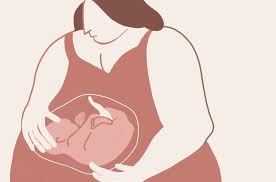
 Obesity before and during pregnancy markedly increases maternal and fetal complications, so management should focus on preconception weight optimization, tight antenatal risk screening, and gestational weight-gain control.
Maternal complications: gestational diabetes, gestational HTN/preeclampsia, cesarean, operative delivery, infection, post partum thromboembolism.
Fetal/neonatal risks: increased miscarriage, stillbirth, congenital anomalies (NTD, cardiac, abdominal wall), macrosomia, NICU admission, later obesity/metabolic disease.
Fertility effects: Obesity prolongs time to pregnancy and lowers conception rates.
Preconception and interpregnancy care: Weight optimization: Counsel on structured diet + activity with goal of weight loss before conception.
Folic acid: Start 1–3 months preconception; many guidelines favor higher-dose folate in obesity.
Screen comorbidities: Screen/manage T2DM, HTN, OSA, thyroid disease, depression before pregnancy
Maternal risks rise with higher body mass index (BMI): gestational diabetes, gestational hypertension, and preeclampsia
Cesarean delivery risk also increases odds ratio.
Fetal risks include large‑for‑gestational‑age (LGA) and macrosomia, neonatal ICU admission, and respiratory distress.
Stillbirth risk is elevated in maternal obesity.
Venous thromboembolism risk is higher; in UK data, 57% of pregnancy VTE deaths occurred in obese women.
Excess gestational weight gain increases gestational hypertension, cesarean delivery, and macrosomia.
Guidelines agree on optimizing pre‑pregnancy weight, limiting gestational weight gain, early screening for gestational diabetes, and considering low‑dose aspirin when additional preeclampsia risks exist, though the optimal aspirin dose varies by guideline.
Dietary counseling and moderate daily physical activity are recommended during pregnancy; postpartum weight management and breastfeeding are encouraged to reduce long‑term risks.
Pregnancy with obesity carries higher risks but targeted management can lower them.
Maternal risks rise with higher body mass index (BMI): gestational diabetes, gestational hypertension, and preeclampsia.
Fetal risks include large‑for‑gestational‑age (LGA) and macrosomia, neonatal ICU admission and respiratory distress.
Stillbirth risk is elevated in maternal obesity
Venous thromboembolism risk is higher; in UK data, 57% of pregnancy VTE deaths occurred in obese women
Pregnancy with obesity carries higher risks but targeted management can lower them.