
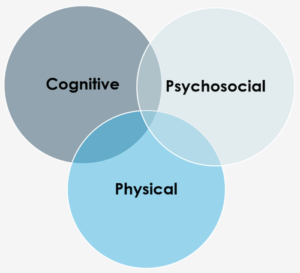
 Post-intensive care syndrome (PICS) encompasses physical, cognitive, and mental health impairments that develop during or persist after ICU discharge, affecting both patients and their families.
PICS patients have an increased risk of developing physical, cognitive, psychological, and social health impairments that negatively affect functional independence and quality of life.
PICS is defined as new or worsening impairment in physical, cognitive, or mental health status arising after a critical illness and persistent beyond acute care hospitalization.
The physical domain includes ICU-acquired weakness with multidimensional functional disability, muscle atrophy, entrapment neuropathies (foot or wrist drop), pressure injuries, nutritional compromise, swallowing difficulties, and mobility impairments that can persist for years.
Additional physical sequelae include: frailty, musculoskeletal disorders such as frozen joints, contractures, procedure-related trauma such as vocal cord dysfunction, tracheal stenosis, hearing or vision changes, taste alterations, and appearance changes such as alopecia, scarring.
Cognitive deficits may include difficulties with memory, executive function, visuofacial skills, language, attention, and concentration, along with anxiety, depression, PTSD, sleep distrubance, suicidality, and substances abuse disorders.
The prevalence of PICS ranges from 45 to 63% at 0 to 12 months after ICU discharge.
These symptoms can last for weeks, months, or even years, significantly impacting a survivor’s quality of life.
Symptoms generally fall into three main domains:
Physical: Includes ICU-acquired weakness, severe fatigue, shortness of breath, pain, and difficulty with daily activities like dressing or bathing.
Cognitive: Manifests as “brain fog,” memory loss, poor concentration, processing speed, and executive dysfunction.
Mental Health: Common conditions include anxiety, depression, and Post-Traumatic Stress Disorder (PTSD), often triggered by traumatic memories of the ICU stay.
The cognitive domain features deficits are often comparable in severity to mild Alzheimer’s disease or moderate traumatic brain injury—that can persist for 5 years or longer.
Duration of ICU delirium is the most potent risk factor for cognitive dysfunction.
The mental health domain includes depression (17-43% at 1 year), anxiety (23-48%), and PTSD (25% up to 8 years), along with suicidality and substance misuse.
Family members and caregivers of ICU survivors often experience similar psychological distress, including anxiety, sleep deprivation, and grief.
Pediatric PICS: Children who survive critical illness face unique recovery challenges related to their developmental stage.
The likelihood of developing PICS is higher for patients who experience:
Delirium during their ICU stay.
Prolonged mechanical ventilation
Heavy sedation or use of certain medications like benzodiazepines.
Risk factors include previous psychiatric illness
Prolonged ICU stay, and extended sedative exposure.
Severe infections like sepsis or Acute Respiratory Distress Syndrome (ARDS).
Older age
Female sex.
Prevention and Recovery
Early Mobilization: Starting physical therapy as soon as it is safe to maintain muscle mass.
ICU Diaries: Written records kept by staff or family to help patients bridge memory gaps and correct delusional memories.
Post-ICU clinics provide integrated care from various specialists.
Peer Support
PICS affects approximately 54% of ICU survivors overall, with the physical domain showing the highest prevalence at 46%.
Patients with ICU stays exceeding 4 days have 1.2 times higher risk of developing at least one PICS domain.
Patients at high risk include those with pre-existing frailty, functional impairment, cognitive dysfunction, or mental health disorders, as well as those affected by sepsis, shock, acute respiratory distress syndrome, delirium, or post ICU symptoms of anxiety, depression or PTSD.
The Society of Critical Care Medicine recommends screening high-risk patients within 2-4 weeks of discharge.
Treatment:
ICU diaries by family members and friends and clinicians help patients understand what happened to them while they were unconscious or delirious, reduces symptoms of depression and anxiety, and exercise programs improve mental health component scores.
Physical rehabilitation and psychological support/psychotherapy may also decrease loneliness and isolation.
Post-intensive care syndrome (PICS) management centers on prevention through the ABCDEF bundle during ICU care and multidisciplinary treatment after discharge, though the overall evidence base for specific interventions remains limited.
The cornerstone of PICS prevention is the SCCM-endorsed ABCDEF bundle, which targets modifiable ICU risk factors — particularly delirium and prolonged mechanical ventilation:
Assess, Prevent, and Manage Pain
Both Spontaneous Awakening and Breathing Trials
Choice of Analgesia and Sedation
Delirium: Assess, Prevent, and Manage
Early Mobility and Exercise
Family Engagement and Empowerment
A prospective multicenter cohort study of 15,226 adults found that complete bundle implementation was associated with lower 7-day mortality, decreased next-day mechanical ventilation, reduced coma and delirium, and higher rates of discharge to home.
Guidelines additionally recommend multicomponent nonpharmacologic strategies — including reorientation, cognitive stimulation, sleep optimization, and early mobilization — to reduce delirium.
Additional in-ICU preventive strategies include family-centered approaches (flexible visitation, enhanced communication), early consultation of psychology, palliative care, and spiritual care, and in-hospital physical/occupational therapy, though evidence for these remains limited.
Treatment: Post-Discharge Care: Serial assessments beginning 2–4 weeks after hospital discharge, prioritized among high-risk patients (those with sepsis, ARDS, prolonged mechanical ventilation, or delirium).
Among nonpharmacologic interventions, only two showed statistically significant benefit:
ICU diaries — narratives written by family, friends, and clinicians to help patients reconstruct their ICU experience — reduced depression and anxiety.
Physical rehabilitation trials have reported mixed outcomes, suggesting that individualized, patient-specific approaches may be more effective than standardized protocols.
Psychological interventions, including psychotherapy and early psychological support, have more robust evidence.
Peer support, though less studied, may promote psychological empowerment and reduce isolation.
Post-ICU recovery clinics.
Specialized multidisciplinary clinics integrating pulmonology, rehabilitation, physical/occupational therapy, and behavioral health are increasingly recommended
Impairments may persist for 5–15 years, underscoring the need for long-term follow-up in post-ICU syndrome.
In a randomized clinical trial of patients who required mechanical ventilation for 48 hours or longer, who underwent a multi component rehabilitation program remotely, did not significantly improve health related quality of life at eight weeks in ICU survivors (IRehab Trial Investigators).