
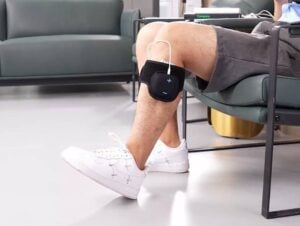
 Peroneal nerve stimulation (PNS) is a therapeutic technique that uses electrical impulses to activate the peroneal nerve.
It is primarily used to treat “foot drop” by lifting the foot during walking), alleviate chronic leg pain, manage Restless Legs Syndrome (RLS), and boost lower limb circulation.
Peroneal nerve stimulation is a neuromodulation technique with three major clinical applications: drop foot correction after central nervous system lesions, chronic neuropathic pain management, and restless legs syndrome (RLS).
It uses functional electrical stimulation (FES) to trigger ankle movement at the right time during your stride, offering an alternative to rigid ankle-foot orthosis braces.
Chronic Pain and RLS:
Peripheral nerve stimulators are placed near the nerve (often using ultrasound guidance) to block pain signals or interrupt the sensations that cause restless legs.
Circulation & Recovery: Devices like the geko device stimulate the common peroneal nerve to increase blood flow, which helps prevent deep vein thrombosis (DVT) and reduces post-operative swelling.
External electrodes are placed on the skin over the outside of the knee (near the fibular head) where the peroneal nerve is closest to the surface.
Implanted: A tiny receiver and electrode cuff are surgically wrapped directly around the nerve, receiving power from an external unit worn on the body.
.Drop Foot Correction:
The most established application is for stroke-related drop foot, where peroneal nerve stimulation serves as a functional neuroprosthesis.
Stimulation of the peroneal nerve during the swing phase of gait produces ankle dorsiflexion, correcting foot drop.
Both transcutaneous surface and implantable systems are available:
Implantable systems (ActiGait®, a 4-channel peroneal nerve stimulator) have demonstrated significant improvements in walking velocity (+0.1 m/s), walking distance (+33 m over 6 minutes), and patient-reported performance and satisfaction at 12-month follow-up.
A randomized controlled trial of 23 chronic stroke survivors showed that implantable peroneal nerve stimulation normalized stance and double support phases and provided superior ankle dorsiflexion during swing compared to conventional ankle-foot orthoses (AFOs).
Surface-based systems have demonstrated comparable efficacy to AFOs in improving hemiplegic gait, with the added potential for motor relearning — some patients regain voluntary ankle control after extended use and no longer require the device.
Indications include drop foot from stroke, multiple sclerosis, or CNS tumors (upper motor neuron lesions only).
Brain imaging studies have shown associated cortical metabolic recovery in damaged motor areas after one year of use.
Peripheral nerve stimulation targeting the common peroneal, superficial peroneal, tibial, and sural nerves is used for refractory lower-extremity neuropathic pain.
The distal common peroneal, tibial, and sural nerves are the most frequently targeted nerves (60%), with persistent postsurgical pain being the most common indication.
A retrospective series of 21 patients receiving permanent PNS for lower-extremity neuralgias (targeting superficial peroneal and/or posterior tibial nerves) showed a mean pain reduction of 50% at long-term follow-up, with 74% of patients achieving ≥50% improvement.
PNS may also target the common peroneal nerve for painful diabetic neuropathy, though evidence remains limited.
A high-frequency peroneal nerve stimulation device worn bilaterally on the lower legs for 30–60 minutes before bedtime has shown benefit as a supplemental treatment for medication-refractory RLS.
Of 133 patients (90% on concurrent pharmacotherapy), 45% were rated as much or very much improved after 4 weeks of peroneal nerve stimulation versus 16% with sham.
Peroneal electrical transcutaneous neuromodulation is an emerging noninvasive method for overactive bladder that selectively stimulates the peroneal nerve in the popliteal fossa, representing an alternative to percutaneous tibial nerve stimulation.