
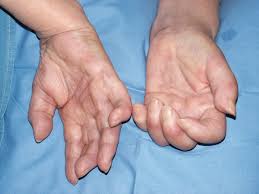
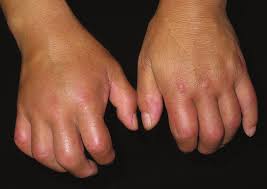
 Palmar Fasciitis and Polyarthritis Syndrome (PFPAS) is an extremely rare paraneoplastic condition most often associated with underlying malignancies, particularly ovarian cancer.
It is characterized by the sudden onset of bilateral hand swelling, pain, and rapidly progressing flexion contractures that can lead to a significant loss of hand function.
PFPAS is a rare paraneoplastic rheumatic disorder characterized by painful swelling and inflammation of the palmar fascia, tendon sheaths, and small joints of the fingers and wrists, leading to rapidly progressive flexion contractures of both hands.
Key Clinical Features “Woody Hands”: This hallmark feature describes hand subcutaneous tissues that have become hard, indurated, and swollen due to extensive palmar fascial thickening and fibrosis.
Polyarthritis: Patients typically experience symmetrical joint pain (arthralgia) and inflammation (synovitis) in the small joints of the hands and wrists, and occasionally larger joints like the shoulders.
The musculoskeletal symptoms typically precede or accompany the diagnosis of malignancy, often appearing before the cancer is detected.
Flexion Contractures: Rapidly developing stiffness leads to a permanent bent position of the fingers, which is often resistant to conventional arthritis treatments.
Groove Sign: An indentation of the skin above superficial veins when the hand is elevated, often seen in cases involving significant fasciitis.
PFPAS is considered a paraneoplastic syndrome, meaning it is a distant effect of a tumor rather than a direct result of the tumor’s growth or spread.
Ovarian adenocarcinoma is the most frequent association, appearing in approximately 37% to 69% of cases.
The syndrome is most commonly associated with ovarian cancer, though it has been reported with adenocarcinomas of the breast, gastrointestinal tract, lung, bladder, cervix, as well as hematologic malignancies like leukemia, have been documented.
Musculoskeletal symptoms precede a cancer diagnosis in about 50% to 60% of cases, often by an average of 4 to 6 months.
Clinical features include bilateral hand involvement with palmar fascial thickening, polyarthritis affecting the fingers, wrists, and often shoulders, and rapid development of flexion contractures.
Serum tumor markers can be helpful in identifying the underlying malignancy.
Diagnosis is primarily clinical, supported by laboratory tests and imaging to rule out other conditions like rheumatoid arthritis or scleroderma.
Screening for age-related malignancies is essential when PFPAS is suspected.
Diagnostic tools include tumor markers, MRI, ultrasound, and occasionally PET-CT to locate an occult tumor.
Treatment: The primary treatment is addressing the underlying malignancy through surgery, chemotherapy, or radiation.
While treating the cancer may improve swelling and pain, the fibrotic hand contractures are often irreversible.
Corticosteroids and traditional immunosuppressants generally show limited effectiveness in resolving PFPAS symptoms.
Complete remission of PFPAS can occur with successful treatment of the underlying cancer, though digital contractures may persist.
PFPAS warrants thorough investigation for occult cancer, particularly gynecologic examination in women presenting with sudden onset of unexplained hand pain, palmar fasciitis, and digital contractures.
Rare idiopathic cases without associated malignancy have been reported.