
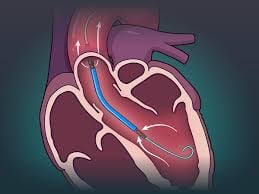
 Microaxial flow pumps are percutaneous, catheter-based mechanical circulatory support devices that unload the left ventricle and maintain systemic perfusion in patients with cardiogenic shock or undergoing high-risk cardiac interventions.
By using an Archimedes screw to move blood from the ventricle to the aorta, they reduce myocardial workload but carry higher risks of bleeding and kidney injury.
These pumps are inserted percutaneously across the aortic valve, drawing blood from the left ventricle and ejecting it into the ascending aorta.
It is used primarily to treat ST-elevation myocardial infarction (STEMI) related cardiogenic shock (CS) or for hemodynamic support during high-risk percutaneous coronary interventions (PCI).
The DanGer Shock trial found that in patients with AMI-related cardiogenic shock, early use of a microaxial flow pump reduced 180-day mortality compared to standard care, particularly for those with very low systolic blood pressure.
Its use is associated with a higher incidence of adverse events compared to standard care, specifically an increased risk of severe bleeding, limb ischemia, and renal-replacement therapy.
Contraindications: Not typically used in patients with severe peripheral arterial disease as it prevents insertion, or significant aortic stenosis.
Comparison to Other DevicesUnlike intra-aortic balloon pumps (IABP), which provide limited support, microaxial flow pumps provide active, higher-level forward flow support (up to 5.5 L/min for 5.5 devices).