
 Malassezia is a genus of fungi-a yeast belonging to the division Basidiomycota.
Some species of Malassezia are found on the skin of animals, including humans.
Because malassezia requires fat to grow, it is most common in areas with many sebaceous glands—on the scalp, face, and upper part of the body.
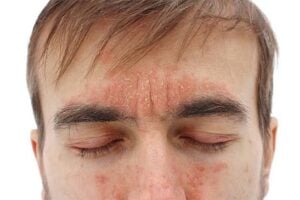
Malassezia, (a genus of fungi) infections of human skin can cause or aggravate a variety of conditions, including dandruff, seborrheic dermatitis, and acne.
When Malassezia grows too rapidly, the natural renewal of cells is disturbed, and dandruff can appear with itching, but a similar process may also occur with other fungi or bacteria.
Identification of Malassezia on skin has been aided by the application of molecular or DNA-based techniques.
M. globosa is the species that causes most skin disease in humans, and that it is the most common cause of dandruff and seborrhoeic dermatitis.
There can be as many as ten million M. globosa organisms on a human head.
The genome of dandruff-causing Malassezia globosa has 4,285 genes.
M. globosa uses eight different types of lipase, along with three phospholipases, to break down the oils on the scalp.
Any of these 11 proteins would be a suitable target for dandruff medications.
Prescription and over-the-counter shampoos containing ketoconazole are commonly used to treat dandruff caused by Malassezia.
M. globosa has been predicted to have the ability to reproduce sexually, but this has not been observed.
Some species of Malassezia can cause hypopigmentation or hyperpigmentation.
Allergy tests for these fungi are available.
The skin rash of tinea versicolor (pityriasis versicolor) is also caused by an infection of this fungus.
Translocation of Malassezia species from the intestines into pancreatic neoplasms has been associated with pancreatic ductal adenocarcinoma, and the fungi may promote tumor progression through activation of host complement.
M. restricta, which is normally found in the skin, is linked to disorders like Crohn’s disease and inflammatory bowel disease when found in the gut.
Malassezia folliculitis
Pityrosporum (Malassezia) ovale, which is lipid-dependent and found only on humans.
P. ovale was later divided into two species, P. ovale and P. orbiculare, but current sources consider these terms to refer to a single species of fungus, with M. furfur the preferred name.
Pityrosporum (Malassezia) pachydermatis, which is lipophilic but not lipid-dependent. It is found on the skin of most animals.
Malassezia grows rapidly, typically maturing within 5 days when incubated at temperatures ranging from 30–35 °C (86–95 °F).
Growth is slower at 25 °C (77 °F), and certain species struggle at 37 °C (99 °F).
These organisms can proliferate on media infused with cycloheximide.
An essential factor for the growth of Malassezia is the presence of long-chain fatty acids, with M. pachydermatis being an exception.