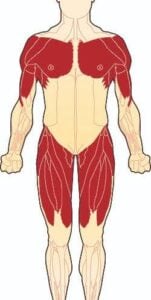
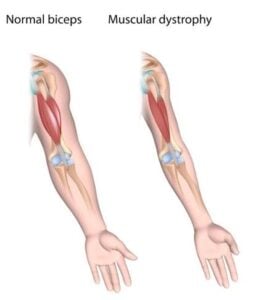
 Limb-girdle muscular dystrophy (LGMD) is a group of rare genetic conditions that cause gradual weakness and wasting of muscles around the hips and shoulders (the limb girdles).
Symptoms typically worsen over time, and severity varies widely across more than 30 known subtypes.
Early Signs and Symptoms
Hip and thigh weakness: A “waddling” gait, difficulty running, trouble climbing stairs, or struggling to stand up from chairs or low seats.
Shoulder and upper arm weakness: Trouble lifting arms overhead, reaching high shelves, combing hair, or carrying heavy items.
Other possible signs: Calf muscle enlargement (hypertrophy) in some types, and potential involvement of heart or breathing muscles depending on the specific subtype.
Causes
LGMD is caused by mutations in genes responsible for producing proteins that maintain, repair, and stabilize muscle fibers.
Common examples include variants in the CAPN3 gene (often linked to LGMD R1/D4) and the FKRP gene (linked to LGMD 2I/R9).
Most subtypes follow an autosomal recessive inheritance pattern, while a smaller portion are autosomal dominant.
Diagnosis
Diagnosis commonly involves:
Blood tests: Checking for elevated creatine kinase (CK), an enzyme released when muscle tissue is damaged.
Genetic testing: Gene panels or broader genetic sequencing to identify the exact subtype.
Additional tests: Muscle MRI/imaging, electromyography (EMG), or a muscle biopsy when genetic results are unclear.
Treatment and Prognosis
Targeted medication: Welgemda (ribitol) as the first treatment for limb-girdle muscular dystrophy type 2I/R9 in adults and children weighing at least 30 kg.
Supportive care: Physical therapy, stretching, mobility aids, and regular heart and lung monitoring help maintain function and manage complications.
Prognosis: Progression varies from slow to more rapid depending on the subtype and individual.
Many people retain independent walking for years, though some eventually need mobility devices or respiratory/cardiac support.
Place on site with image