
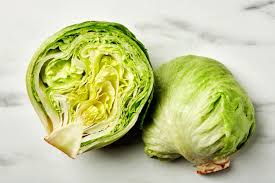
 Lettuce (Lactuca sativa) is an annual plant of the family Asteraceae mostly grown as a leaf vegetable.
The leaves are most often used raw in green salads, although lettuce is also seen in other kinds of food, such as sandwiches, wraps and soups; it can also be grilled.
Generally grown as a hardy annual, lettuce is easily cultivated, although it requires relatively low temperatures to prevent it from flowering quickly.
It can be plagued by numerous nutrient deficiencies, as well as insect and mammal pests, and fungal and bacterial diseases.
Contaminated lettuce is often a source of bacterial, viral, and parasitic outbreaks in humans, including E. coli and Salmonella.
Plants generally have a height and spread of 15 to 30 cm (6 to 12 in).
Lettuce leaves are colorful, mainly in the green and red color spectrums, with some variegated varieties.
Lettuces have a wide range of shapes and textures, from the dense heads of the iceberg type to the notched, scalloped, frilly or ruffly leaves of leaf varieties.
Depending on the variety and time of year, lettuce generally lives 65–130 days from planting to harvesting.
Because of the high water content of lettuce (94.9 percent) creates problems when attempting to preserve the plant – it cannot be successfully frozen, canned or dried and must be eaten fresh.
In the United States in 2022, lettuce was the main vegetable ingredient in salads, and was the most consumed among leaf vegetables; its market was about 20% of all vegetables, with Romaine and iceberg having about equal sales.
Lettuce (iceberg, raw) Nutritional value per 100 g (3.5 oz) Energy 58 kJ (14 kcal) Carbohydrates 3.0 g Sugars 2.0 g Dietary fiber 1.2 g Fat 0.14 g Protein 0.9 g Water 95.6 g
Raw iceberg lettuce is 96% water, 3% carbohydrates, and contains negligible protein and fat.
In a reference amount of 100 grams (3.5 oz), iceberg lettuce supplies 14 calories and is a rich source (20% or more of the Daily Value, DV) of vitamin K (20% DV), with no other micronutrients in significant content.
In lettuce varieties with dark green leaves, such as romaine, vitamin A contents are appreciable due to the presence of the provitamin A compound, beta-carotene.
Dark green varieties of lettuce also contain moderate amounts of calcium and iron.
The edible spine and ribs of the lettuce plant supply dietary fiber, while micronutrients are contained in the leaf portion.
Food-borne pathogens that can survive on lettuce include Listeria monocytogenes, the causative agent of listeriosis, which multiplies in storage.
Other bacteria found on lettuce include Aeromonas species, Campylobacter species, Yersinia intermedia and Yersinia kristensenii, Salmonella bacteria, Viruses, including hepatitis A, calicivirus and a Norwalk-like strain, have been found in lettuce.
Lettuce has been linked to numerous outbreaks of the bacteria E.coli O157:H7 and Shigella; the plants were most likely contaminated through contact with animal or human feces.
Vacuum cooling method, especially prevalent in the California lettuce industry, increased the uptake and survival rates of E. coli O157:H7.
Due to the increase in food demand, the use of treated wastewater effluent for irrigation and animal or human excreta as soil amendments is increasing: the outbreaks of food-borne illnesses increases.
Due to the overuse of antibiotics in farming, the number of pathogens resistant to antibiotics is increasing, one of these being E.coli, which has been found on lettuce irrigated with wastewater.
Pathogens found on lettuce are not specific to lettuce (though some E. coli strains have affinity for Romaine).
Unlike other vegetables which tend to be cooked, lettuce is eaten raw, thus food-borne outbreaks associated with it are more frequent and affect a larger number of people.
Lettuce is characterized by a high water content, typically ranging from 94% to 96% of fresh weight, which underlies its low caloric density.
The energy content of lettuce varies by type, with iceberg lettuce providing 10–14 kcal per 100 grams, while romaine and leaf lettuces provide 15–20 kcal per 100 grams.
Protein content is modest, generally between 0.9 and 1.5 grams per 100 grams, with romaine and leaf lettuces at the higher end of this range.
Fat content is negligible
Dietary fiber content is moderate, with romaine and leaf lettuces providing 1.2–2.0 grams per 100 grams, compared to 0.9–1.2 grams per 100 grams in iceberg lettuce.
The fiber is primarily insoluble, contributing to gastrointestinal health and satiety.
Lettuce is a source of several essential vitamins and minerals. Vitamin C content is highest in romaine and green leaf lettuces (8–15 mg/100 g), lower in red leaf (6–12 mg/100 g), and lowest in iceberg (2–5 mg/100 g).
Folate content ranges from 18–25 μg/100 g in iceberg to 30–45 μg/100 g in romaine and leaf lettuces.
Carotenoids, including β-carotene and lutein, are present at 2–5 mg/100 g in red and green leaf varieties, but only 0.2–0.5 mg/100 g in iceberg.
Lettuce is also a good source of vitamin K1 (phylloquinone).
Mineral content includes potassium (140–250 mg/100 g), calcium (18–40 mg/100 g), magnesium, and phosphorus, with higher concentrations in romaine and leaf lettuces compared to iceberg.
The mineral profile is influenced by soil composition and plant maturity.
Lettuce phytochemical content, includes polyphenols, flavonoids, and anthocyanins.
Red-leaf varieties are particularly rich in anthocyanins, flavonols and total phenolics, which contribute to higher antioxidant activity.
Green varieties are dominated by caffeic acid derivatives.
The nutritional composition of lettuce is highly variable, not only between major types but also within cultivars, leaf positions, and developmental stages.
Red-leaf varieties consistently demonstrate higher levels of phenolics, anthocyanins, carotenoids, and antioxidant activity compared to green-leaf and iceberg types.
Iceberg lettuce, while popular for its texture, is notably lower in vitamins, minerals, and phytochemicals.
Younger plants, microgreens and baby leaves, contain up to 42% more ascorbic acid and 79% more phenolics than mature heads, suggesting that harvesting at earlier stages enhances nutritional value.
Organic farming practices are associated with modestly higher concentrations of polyphenols, flavonoids, calcium, and potassium in lettuce, as well as greater antioxidant activity, compared to conventional methods.
Epidemiological studies and meta-analyses consistently demonstrate that higher intake of green leafy vegetables, including lettuce, is associated with significant reductions in the risk of all-cause mortality, coronary heart disease, and stroke.
A dose-response analysis found that each 100 g/day increment in green leafy vegetables intake is associated with an approximate 25% reduction in risk for these outcomes.
Lettuce as a key driver of the inverse association between vegetable intake and both liver cancer incidence and chronic liver disease mortality independent of other dietary and lifestyle factors.
A randomized crossover trial in healthy young men found that adding 100 g of lettuce to a moderately high-fat meal attenuated the postprandial glycemic and insulinemic response compared to a control meal, though no significant effects were observed on postprandial lipids or inflammatory cytokines within four hours.
There is some evidence for beneficial effects of leafy vegetable consumption on blood glucose and blood pressure regulation, the overall evidence base remains limited and inconsistent for metabolic syndrome as a whole.
The health benefits of lettuce are attributed to its content of fiber, vitamins, and a diverse array of antioxidant and anti-inflammatory phytochemicals, including polyphenols, carotenoids, and anthocyanins.
Lettuce extracts can reduce markers of oxidative stress and inflammation, such as reactive oxygen species, nitric oxide, and pro-inflammatory cytokines, by modulating pathways including PI3K-Akt, MAPK, and JAK-STAT.
The bioavailability of these compounds is influenced by lettuce variety, developmental stage, and preparation method.
Carotenoid absorption is generally low in raw lettuce but can be increased by moderate thermal processing that disrupts the plant cell matrix and enhances release into the micellar fraction during digestion.
Polyphenol bioaccessibility is higher in red-leaf varieties and in microgreens and baby leaves, and can be increased by minimal processing of cutting, shredding, and short-term storage, which induce a wound response and increase phenolic synthesis.
Vitamin C is efficiently absorbed but is susceptible to degradation during storage and thermal treatment, making raw or minimally processed lettuce the best source.
The most significant risk associated with lettuce consumption is foodborne illness due to contamination with pathogenic microorganisms.
Lettuce is frequently consumed raw, and that prevents the inactivation of pathogens by cooking.
Lettuce can harbor a range of bacterial, viral, and parasitic pathogens, including Salmonella spp., Shiga toxin–producing Escherichia coli (STEC, particularly O157:H7), Listeria monocytogenes, and Norovirus.
The mean prevalence of Salmonella spp. and EHEC on lettuce is approximately 4% worldwide, with higher rates in developing countries.
In the United States, lettuce is implicated in up to 75.7% of leafy green–associated foodborne illnesses and 70% of costs, with romaine lettuce accounting for a disproportionate share of STEC O157:H7 outbreaks.
The risk is particularly relevant for vulnerable populations, including children, the elderly, pregnant women, and immunocompromised individuals, who are at increased risk for severe complications from foodborne infections.
Storage temperature is a critical determinant of pathogen survival and growth, with refrigeration at 4–5°C inhibiting growth, while storage at 10–15°C allows for significant proliferation.
Washing, especially before cutting, and the use of chemical sanitizers can reduce but not eliminate microbial risk.
Lettuce allergy is rare but can cause severe IgE-mediated reactions, including anaphylaxis, particularly in individuals with lipid transfer protein (LTP) syndrome or cross-reactive pollen allergies.
Lettuce can accumulate significant levels of nitrates, especially when grown under high nitrogen fertilization or low light conditions.
High nitrate intake can lead to methemoglobinemia in infants and has been associated with potential carcinogenicity due to endogenous formation of N-nitroso compounds.
Lettuce is a major contributor to total dietary nitrate exposure in some populations.
The hazard quotient for nitrate exposure can exceed acceptable daily intake in children, particularly in scenarios of high consumption or elevated nitrate concentrations.
Lettuce is low in energy, protein, and certain micronutrients compared to other vegetables.
Exclusive or excessive reliance on lettuce as a dietary staple could theoretically contribute to nutritional deficiencies, particularly in populations with limited dietary diversity, though this is not a concern in the context of a balanced diet.
Immunocompromised individuals, including cancer patients, transplant recipients, and those with HIV/AIDS, are at substantially increased risk for foodborne illness from pathogens commonly associated with raw lettuce.
The risk of invasive listeriosis from ready-to-eat salads is several-fold higher in cancer patients than in the general population: With kitchen-scale interventions such as surface blanching and thorough rinsing providing significant risk reduction but not complete elimination of risk.
Clinical guidelines recommend that immunocompromised patients avoid raw lettuce and substitute cooked vegetables.
Pregnant women are at increased risk for severe complications from foodborne pathogens found in lettuce, particularly Listeria monocytogenes, which can cause miscarriage, stillbirth, or neonatal sepsis.
Pregnant women should avoid higher-risk foods, including raw or minimally processed leafy greens, unless they are known to be safe.
The elderly are more susceptible to foodborne illness due to age-related changes in immune function and comorbidities, and outbreaks of E. coli, Salmonella, and Listeria linked to lettuce have resulted in disproportionately severe outcomes in older adults.
Infants and young children are at risk for methemoglobinemia due to high nitrate content in lettuce and are more vulnerable to severe outcomes from foodborne pathogens.
When compared to other leafy greens such as spinach, kale, and chard, lettuce generally contains lower concentrations of several key micronutrients and phytochemicals.
Spinach and kale are recognized for their higher levels of iron, calcium, magnesium, folate, and vitamins A, C, and K, as well as a broader spectrum of flavonoids and glucosinolates.
Chard and chicory also tend to surpass lettuce in terms of protein, mineral content, and antioxidant activity.
Lettuce is a source of several bioactive compounds, including glycosylated flavonoids, phenolic acids, carotenoids, tocopherols, and sesquiterpene lactones.
The antioxidant capacity of lettuce is largely attributable to its polyphenol and carotenoid content.
Red-leaf lettuces, in particular, demonstrate higher antioxidant activity due to their elevated anthocyanin and phenolic content.
The overall antioxidant potential of lettuce is generally lower than that of spinach, kale, and other dark leafy greens.
Dietary Guidelines for Americans, recommend a total vegetable intake of 2.5 to 3 cups per day for adults, with an emphasis on variety and inclusion of dark green, red, and orange vegetables.
Lettuce can be consumed daily as part of salads, sandwiches, or as a garnish, but should not be the sole or predominant vegetable in the diet.
The inclusion of one to two cups (roughly 50–100 grams) of lettuce per day as part of the total vegetable intake, with greater variety and inclusion of more nutrient-dense greens further enhancing nutritional adequacy.
The nutritional value of lettuce is highest in red-leaf, romaine, and younger forms (microgreens, baby leaves), which provide higher concentrations of vitamin C, carotenoids, polyphenols, and antioxidant activity compared to iceberg or mature head lettuces.
Washing lettuce is essential for reducing microbial contamination, with vinegar and chemical sanitizers providing greater efficacy than water alone, but at the cost of some nutrient loss, particularly vitamin C and carotenoids.
Cutting lettuce increases susceptibility to microbial growth and accelerates nutrient degradation, with washing-before-cutting being preferable for microbial reduction.
Refrigeration at 4–5°C is critical for inhibiting pathogen growth and slowing nutrient loss, while storage at higher temperatures rapidly compromises both safety and quality.
Washing lettuce with tap water alone can reduce microbial load with modest reduction and may not be sufficient to eliminate pathogens, especially in cases of high initial contamination or when pathogens are internalized within leaf tissues.
Washing protocols, such as immersion in vinegar (5% solution) or salt solutions, are more effective in reducing E. coli contamination, with vinegar washing providing the greatest reduction among common consumer practices.
Washing can lead to losses of water-soluble nutrients, particularly vitamin C of up to 35% loss and phenolic compounds of up to 17% loss.
High concentrations of peroxyacetic acid and sodium hypochlorite can reduce carotenoid content by 18–60%.
Cutting lettuce accelerates physiological changes that compromise both quality and safety, increasing the surface area available for microbial colonization and providing nutrients that support microbial growth.
Washing whole heads before cutting achieving an additional 0.8 log reduction in E. coli O157:H7 compared to the traditional cutting-before-washing process.
Refrigeration is the most effective method for preserving both the safety and nutritional quality of lettuce post-harvest and post-processing.
Storage at 4–5°C inhibits the growth of foodborne pathogens, while storage at higher temperatures allows for significant proliferation.
Ascorbic acid undergoes first-order degradation during storage, with the rate at 10°C being twice as fast as at 0°C.
Lettuce is a valuable component of a healthy diet, offering hydration, fiber, and a range of vitamins and phytochemicals, particularly in red-leaf and younger forms.
Regular lettuce consumption, as part of a diet rich in a variety of vegetables, is associated with reduced risk of cardiovascular disease, certain cancers and chronic liver disease mortality.
Lettuce health benefits are attributed to its content of fiber, vitamins, and a diverse array of antioxidant and anti-inflammatory phytochemicals, with red-leaf and early-stage varieties generally offering higher concentrations of these compounds.
The principal risks associated with lettuce consumption are related to foodborne illness, rare allergic reactions, and nitrate/nitrite exposure.
Lettuce is generally less nutrient-dense than other leafy greens such as spinach, kale, and chard, but red-leaf and microgreen forms are more nutrient-dense than iceberg.
The greatest health benefits are realized when lettuce is part of a balanced, varied diet that includes a wide range of leafy greens and other vegetables.
For most adults, one to two cups (50–100 grams) of lettuce per day can be safely included as part of the total recommended vegetable intake, with preference for red-leaf, romaine, and younger forms.
Immunocompromised individuals, pregnant women, the elderly, and young children—should avoid raw lettuce due to the unique risks of foodborne illness and, for infants, nitrate exposure.
The reduction in pesticide exposure is the most consistent and clinically relevant benefit of organic lettuce, though the overall nutritional differences are modest.