
Iontophoresis is a non-invasive medical procedure that uses a mild electrical current to deliver charged substances—typically water or medication—through the skin.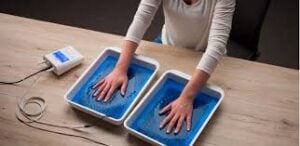
It is most commonly known as a highly effective treatment for hyperhidrosis (excessive sweating) of the hands, feet, and underarms, with success rates often reported between 80% and 91%.
Hyperhidrosis (Excessive Sweating) is the most frequent application.
Affected areas are submerged in tap water (or touched by water-soaked pads) while a gentle current is passed through.
This temporarily shuts off sweat glands.
Physical Therapy & Sports Injuries:
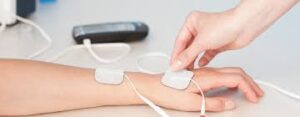
Used to deliver anti-inflammatory medications (like dexamethasone) or pain relievers (like lidocaine) directly to injured joints, tendons, or muscles without using needles.
Drug Delivery: It acts as a needle-free injection for systemic or local medications, allowing drugs to bypass the digestive system.
Diagnostics: Used in the “sweat test” to help diagnose cystic fibrosis by using a drug (pilocarpine) to stimulate sweat production. \ The target area (hands, feet, or underarms) is placed in water or in contact with medicated pads.
Current Application: A specialized device sends a low-voltage direct current through the water or pads.
A mild “pins and needles” or tingling sensation is felt.
A typical session lasts 20–40 minutes. Initially, treatments are done 3–5 times per week.
Once dryness is achieved (usually in 2–4 weeks), a maintenance schedule of once per week or less is followed.
Common Side Effects: Temporary skin redness, dryness, itching, or small blisters.
These are usually mild and can be managed with moisturizer or hydrocortisone cream.
Contraindications: pregnancy, have a cardiac pacemaker, or have significant metal implants.
Treatments can begin in a clinical setting under a doctor’s supervision.
FDA-cleared home-use devices; Dermadry] or R.A. Fischer can manage the condition at home. Place on site with images already on site