
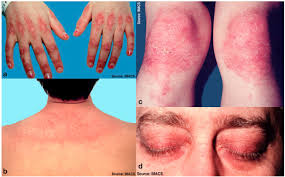
 Rare systemic processes that affect muscles with proimal muscle weakness, muscle enzyme elevations, fever, weakness, weight loss and rash.
Classified by: presentation, age of onset, skin and muscle biopsy pathologic findings.
They are classified into five major subgroups of autoimmune diseases, characterized by immune mediated damage to skeletal muscle: Inclusion body myositis, immune mediated necrotizing, myopathies, anti-synthetase syndrome, overlapping myositis, and dermatomyositis.
Includes: dermatomyositis, polymyositis, juvenile dermatomyositis, immune mediated necrotizing myopathy, and sporadic inclusion body myositis.
Inflammatory muscle diseases largest group of treatable myopathies in children and adults.
Inclusion-body myositis and immune-mediated necrotizing myopathies primarily affect muscle, with prognosis, largely determined by functional impairment, whereas anti-synthetase syndrome, overlapping myositis, and dermatomyositis are systemic diseases that can involve the joints, skin, and lungs, and may be life-threatening.
The majority of inflammatory myopathies are associated with myositis specific autoantibodies, which inform the diagnosis, sub type classification, and prognosis.
Heterogeneous disorders classified on basis of of clinicopathologic features.
Each subtype has a different prognosis and treatment response.
Associated with increased difficulty using proximal muscles as with climbing stairs, lifting, and getting out of a chair.
Idiopathic inflammatory myopathies (IIM) are characterized by inflammatory muscle tissue infiltrates.
IIM are rare diseases with an incidence estimated at 0.79 for 100,000 persons and prevalence of 14 cases per hundred thousand persons.
As with other rheumatic autoimmune diseases, IIM affects female persons more frequently with a notable exception of inclusion body myositis, which occurs more often a male individuals.
Inclusion-body myositis almost always begins after 35 years of age and most often infected persons at approximately 60 years of age.
Although idiopathic inflammatory myopathies are acquired diseases they have significant genetic components that affects susceptibility.
Genomewide ssociation studies have identified the HLA region as most strongly associated with distinct patterns across subgroups.
Hereditary is established estimated to be as high as 24% in identical twins influence by environmental factors, both infectious and non-infectious-smoking, UV radiation, cancer, and certain medication, such as statins.