
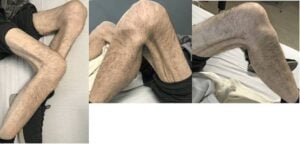
 Diabetic lumbosacral radiculoplexus neuropathy (DLRPN), also known as diabetic amyotrophy, is a rare, painful condition that usually affects older adults with type 2 diabetes.
DLRPN — also known as diabetic amyotrophy or Bruns-Garland syndrome — is an immune-mediated, monophasic neuropathy caused by inflammatory microvasculitis and ischemic injury of lumbosacral nerve roots, plexus, and peripheral nerves.
It affects approximately 1% of the diabetic population, with an estimated annual incidence of 2.79 per 100,000.
It causes sudden, severe pain in the hip, thigh, or groin, followed by progressive leg weakness and muscle wasting.
Symptoms often begin on one side but can spread to the other leg.
Key characteristics of DLRPN include:
Onset: Starts acutely or subacutely with deep, often throbbing pain that is usually worse at night.
Weakness and Atrophy: Progresses to significant motor weakness (especially in the thighs and hips) and noticeable muscle shrinkage, making it difficult to stand, climb stairs, or rise from a chair.
Associated Signs: Often accompanied by rapid, unintentional weight loss and sometimes mild sensory loss.
The exact cause is believed to be ischemic nerve injury driven by microvasculitis (inflammation of the small blood vessels of the nerves) rather than just high blood sugar.
Diagnosis relies clinical history and examination, often supplemented by electromyography (EMG) or nerve conduction studies.
The disease is self-limiting in most cases, treatment primarily focuses on managing the severe pain-physical therapy and neuropathic pain medications and optimizing blood glucose control.
DLRPN typically affects patients with type 2 diabetes in middle to older age with mean onset ~62 years, often with well-controlled diabetes of short duration, lower BMI, and few systemic microvascular complications.
Acute to subacute onset of severe, asymmetric pain in the proximal lower extremity (thigh/hip), described as deep, aching, lancinating, and burning, often with contact allodynia and nocturnal worsening.
Proximal weakness and atrophy, predominantly affecting the iliopsoas and quadriceps, causing difficulty with stairs, rising from chairs, and knee buckling.
Weight loss often >10 lbs preceding or accompanying the syndrome
Progression to involve distal muscles and the contralateral limb over time; paraspinal involvement is common.
Autonomic dysfunction occurs in approximately half of patients (orthostatic hypotension, bowel/bladder changes, sexual dysfunction).
Nearly all patients require ambulation aids during the illness, and approximately half become wheelchair-bound at peak severity.
The pathologic hallmark is ischemic nerve injury with microvessel inflammation (microvasculitis), making DLRPN a variant of nonsystemic vasculitic neuropathy.
Risk factors include rapid correction of chronic hyperglycemia and abrupt changes in glycemic control.
Nerve conduction studies (NCS): Reduced compound muscle action potential amplitudes (axonal loss), affecting the femoral nerve most severely.
EMG: Acute denervation and reduced recruitment in affected muscles; paraspinal denervation is frequently present.
CSF: Elevated protein, but it is not required for diagnosis.
MRI of the lumbosacral plexus may show plexus abnormalities and helps exclude structural causes.
Other causes of lumbosacral syndrome such as compressive, neoplastic must be excluded through imaging and laboratory testing.
Treatment
Management is primarily supportive, as no therapy has been definitively shown to alter the disease course:
Neuropathic pain management with anticonvulsants (gabapentin, pregabalin) and tricyclic antidepressants.
Physical therapy and short-term use of assistive devices for ambulation.
Treatment of depression, which commonly coexists with prolonged pain and disability.
– Glycemic optimization with avoidance of overly rapid HbA1c correction[1][2]
A completed RCT of IV methylprednisolone showed improvement in neuropathic symptoms (pain) but did not hasten recovery of strength compared to placebo.
Some case series have reported improvement with corticosteroids, IVIG, or plasma exchange, but given the natural history of spontaneous improvement, causation cannot be established.
The syndrome is monophasic and self-limited in most cases.
Mean time to recovery onset is approximately 3 months, with recovery generally complete by 18 months, though residual weakness often persists.
Recurrence is uncommon.
Patients with LRPN had a 76% increased risk of death compared to age/sex-matched controls, though this was attributable to diabetes and comorbidities rather than the neuropathy itself.
An association between GLP-1 receptor agonist (GLP-1RA) use and DLRPN, with an odds ratio of 1.51 for DLRPN in GLP-1RA users compared to non-users.
In a case-control study, the median time from GLP-1RA initiation to DLRPN onset was 6 months, with 70% of episodes occurring within 8 months.
Affected patients had significant HbA1c reductions (median 2.4%) and weight loss, and the rate of ambulation loss was higher (70%) than in historical pre-GLP-1RA series (48%).
This association is thought to be mediated by the rapid metabolic changes (HbA1c reduction and weight loss) induced by these agents rather than a direct drug effect.
Clinicians should maintain awareness of this potential complication in patients on GLP-1RAs undergoing aggressive glycemic control.