
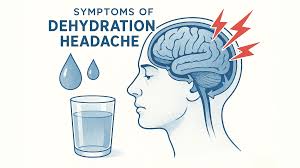
 Dehydration headaches occur when your body loses more fluids and electrolytes than it takes in.
This causes brain tissue to temporarily contract or shrink, pulling away from the skull and triggering pain receptors.
A dehydration headache rarely occurs alone; it is almost always accompanied by other signs of fluid loss:
Often felt as a dull, throbbing ache that can be widespread or concentrated to the front, back, or sides.
Pain typically intensifies when you moving the head, bend down, or walk.
Accompanying Signs: Dark-colored urine, dry or sticky mouth, dizziness, fatigue, and muscle cramps.
Unlike sinus headaches, they typically do not cause facial pressure; unlike tension headaches, they rarely cause neck pain.
Most mild cases resolve within 30 minutes to a few hours after replenishing fluids.
Electrolytes: Use a low-sugar sports drink or oral rehydration solution to restore mineral balance.
Resting in a cool, shaded area and lie down.
Cold Compress: Applying a cool washcloth or ice pack to your forehead.
Avoid Triggers: Steer clear of caffeine and alcohol, as both act as diuretics and can worsen dehydration.
A dehydration headache occurs when your body doesn’t have enough fluids, causing the brain to temporarily contract or shrink slightly from fluid loss.
This then pulls it away from the skull, triggering pain receptors.
Common symptoms of dehydration headache:
Dull, throbbing pain over the head or at the front/back
Increased pain with movement, bending over, or physical activity
Dry mouth and increased thirst
Fatigue or dizziness
Dark urine
Reduced urination
Prevention:
Aim for about 8-10 cups of water daily
Drinking extra water when consuming alcohol or caffeine
Monitor urine color – pale yellow usually indicates good hydration
Most dehydration headaches improve within 30 minutes to 3 hours of rehydrating.
?