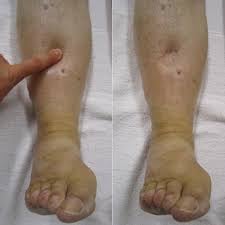
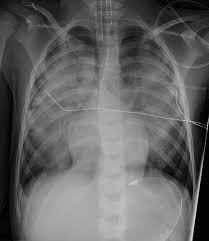
 Rare disease that presents with hypotension, hemoconcentration, hypoalbuminemia, monoclonal gammopathy and plasma leakage resulting in diffuse edema.
Idiopathic systemic capillary leak syndrome caused by sudden, massive leakage of proteins and serum into the extravascular space.
Plasma proteins up to 200 kDa or in some cases, 900 kDa escape the capillary bed, with an intravascular loss of up to 70% of plasma volume.
Capillary leak syndrome (CLS) refers to a clinical condition characterized by a sudden and profound increase in capillary permeability, resulting in the extravasation of plasma and proteins from the intravascular to the interstitial space.
This leads to hypotension, hemoconcentration, hypoalbuminemia, and generalized edema, and can progress to shock and multi-organ dysfunction if severe.
The syndrome can be idiopathic or secondary to triggers such as infections, including viral illnesses, hematologic malignancies, certain drugs (interleukins, monoclonal antibodies, gemcitabine), autoimmune diseases, or toxins.
Idiopathic CLS is rare and often associated with a monoclonal gammopathy, while secondary forms are more common and related to underlying conditions.
Pathophysiologically, capillary leak syndrome is driven by transient, reversible endothelial dysfunction, with humoral mediators such as vascular endothelial growth factor (VEGF), angiopoietin-2, and adrenomedullin implicated in increased vascular permeability.
Clinically, patients present with acute episodes of hypotension, hemoconcentration, hypoalbuminemia, and anasarca, often after a prodrome of malaise or viral symptoms.
Diagnosis is clinical and by exclusion of other causes of shock and edema, such as sepsis, anaphylaxis, or heart failure.
Management is primarily supportive, focusing on judicious fluid resuscitation and vasopressors during acute episodes, with intravenous immunoglobulin (IVIG) used as prophylaxis in idiopathic cases to reduce recurrence.
Most patients have as associated IgG κ or λ monoclonal gammopathy.
Albuminuria not present.
Number and size of pores in capillaries are increased leading to leakage of fluid from the blood to the interstitial space with secondary hypotension, edema and multiple organ failure.
Episode consists of two phases: capillary leak phase and recruitment of interstitial fluid stage.
Capillary leak phase has a duration of 1-4 days and is associated with abdominal pain, nausea edema and hypotension that can cause cardiopulmonary collapse.
The second phase, recruitment of interstitial fluid, leads to recruitment of extravagated fluid with intravascular overload with polyuria and pulmonary edema.
Mortality 21%.
Treatment with terbinafine sulfate and theophylline on a prophylactic basis effective to prevent exacerbations this process.