 Cannabinoid Hyperemesis Syndrome (CHS) is a condition caused by long-term, frequent use of cannabis (marijuana).
It triggers cycles of severe, uncontrollable nausea, vomiting, and abdominal pain.
Cannabinoid hyperemesis syndrome (CHS) is a clinical diagnosis characterized by recurrent nausea, vomiting, and abdominal pain in a patient with prolonged, usually frequent or high-potency cannabis exposure; symptoms often improve transiently with hot bathing but resolve reliably only with sustained cannabis cessation.
Prodromal Phase: Early symptoms often include morning nausea, abdominal discomfort, and a fear of vomiting.
This phase can last for months or years.
Hyperemetic Phase: Characterized by intense, repetitive bouts of vomiting and retching, severe stomach pain, dehydration, and extreme thirst.
A unique behavioral hallmark associated is compulsive hot bathing or showering, which temporarily calms the nausea and pain.
Recovery Phase: Symptoms gradually fade and disappear after stopping cannabis use completely.
Common Symptoms
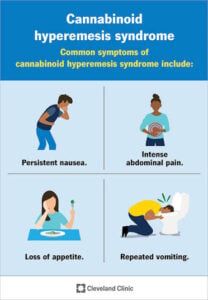
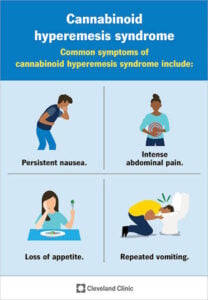
Frequent and severe vomiting (sometimes 20+ times a day)
Cramping or sharp pain in the abdomen
Weight loss and lack of appetite
Temporary relief from very hot water or topical capsaicin cream applied to the belly.
While cannabis is commonly known to stop nausea at low doses, chronic high-dose use over many years (typically 10 to 12 years, or heavy use starting in adolescence) overloads cannabinoid receptors (CB1) in the brain and gut.
This reverses the drug’s normal effects, delaying stomach emptying and throwing the digestive tract and brain-gut axis into severe distress.
Cannabis emesis syndrome pathophysiology may be associated with higher THC concentrations in recent cannabis products, delayed gastric emptying caused by cannabinoid effects on the G.I. tract, genetic factors such as CNR1 gene variations and dysregulation of signaling in the endocabbinoid system whose primary receptors CB1and CB2 are located in the central and peripheral nervous system systems.
THC binds to CB1 receptor in the brain, including the dorsal vagal complex, which is involved in initiation of emesis.
Chronic cannabis use promotes CB1 receptor down regulation, which can increase emesis.
Medical Complications
Repeated, severe vomiting can quickly lead to:
Severe dehydration and electrolyte imbalances Acute kidney injury or kidney failure Erosion of tooth enamel from stomach acid Rare, dangerous issues like seizures, heart rhythm irregularities, or muscle spasms
Treatment and Management
Immediate/Acute Care: Often require intravenous (IV) fluids for dehydration, anti-nausea medications, pain control, hot showers, or capsaicin cream.
Standard anti-nausea drugs sometimes provide limited relief.
Long-Term Cure: The only definitive cure for CHS is complete, long-term cessation of all cannabis products.
If a person starts using cannabis again, the symptoms almost always return.
Support to Quit: Stopping heavy cannabis use can trigger withdrawal symptoms of irritability, trouble sleeping, anxiety.
Behavioral counseling, support groups, or working with a healthcare provider can help.
Cannabis withdrawal as the most effective treatment for CHS and benzodiazepines, haloperidol, and/or topical capsaicin be used during acute episodes.
Diagnostic features
Typical pattern: episodic, severe vomiting with symptom-free intervals, chronic regular cannabis use, abdominal pain, and repeated hot showers or baths for relief.
Important limitation: hot bathing is supportive but not pathognomonic; cyclic vomiting syndrome (CVS) can also improve with hot bathing.
Confirmation: no single laboratory or imaging test confirms CHS.
Resolution after 6 months of abstinence or at least 3 typical vomiting cycles helps distinguish CHS from CVS.
Evaluation during an acute episode
The emergency assessment should first exclude dangerous mimics, particularly:
Pregnancy, bowel obstruction or perforation, appendicitis, pancreatitis, cholecystitis, mesenteric ischemia, diabetic ketoacidosis, sepsis, myocardial ischemia, and intracranial disease when clinically suggested.
Recommended investigations are guided by the presentation but commonly include pregnancy testing, serum electrolytes, renal function, glucose, urinalysis, and electrocardiography; lipase or abdominal imaging is appropriate when the pain pattern or examination is atypical.
Severe dehydration, hypokalemia, hypomagnesemia, acute kidney injury, hematemesis, fever, peritoneal signs, altered mental status, or inability to retain fluids warrant escalation to monitored emergency or inpatient care.
Acute treatment
Fluid and electrolyte replacement are central, particularly with dehydration or acute kidney injury.
Topical capsaicin 0.1% applied to the abdomen is a reasonable option.
Haloperidol can be considered for refractory symptoms after an electrocardiogram and correction of electrolyte abnormalities.
The HaVOC randomized trial found haloperidol superior to ondansetron for nausea and abdominal pain, with shorter emergency-department stay, but acute dystonia occurred in the higher-dose group.
Ondansetron and other conventional antiemetics may be ineffective, and opioids are generally discouraged because they may worsen nausea, bowel dysfunction, and dependence risk.
Hot showers may provide temporary relief, but they do not treat the underlying disorder.
Long-term management
Complete cessation of all cannabis or cannabinoid products is the definitive treatment.
A systematic review identified complete symptom resolution in 62 of 64 patients with documented cessation, although the evidence was based largely on case reports and remains low quality.
Relapse is expected if cannabis is resumed; motivational interviewing, addiction-medicine referral, and treatment of coexisting anxiety, depression, or cannabis use disorder improve the likelihood of sustained abstinence.
Recurrent symptoms despite verified abstinence should prompt reassessment for CVS, pregnancy, gastroparesis, obstruction, metabolic disease, or another cause rather than repeated treatment as CHS.