
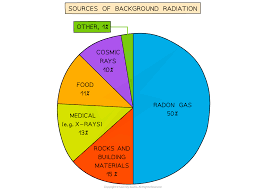
 Background radiation is the ionizing radiation that is always present in the environment from natural and human-made sources, including cosmic rays, radioactive rocks and soil, radon gas, and small contributions from medical and industrial activities.
Background radiation is the baseline level used when measuring another specific radiation source, so it has to be accounted for in radiation monitoring and medical or environmental measurements.
On average, a person receives an annual radiation dose of approximately 2.4 to 3.1 millisieverts (mSv) from natural sources alone.
While this exposure is continuous, it is generally considered low-level and not harmful to human health under normal circumstances.
Background radiation is typically categorized into four primary natural sources and various artificial ones:
Cosmic radiation from space.
Terrestrial radiation from uranium, thorium, radium, and potassium in the ground and building materials.
Internal radiation from naturally occurring radioisotopes in food and the human body.
Artificial sources such as medical imaging, nuclear fallout, and some industrial activities.
Radon and Thoron inhalation:This is the single largest source of natural exposure, accounting for nearly two-thirds of the annual dose.
These radioactive gases emanate from the decay of uranium and thorium in soil and rocks and can accumulate in poorly ventilated buildings.
Radon is often the largest single contributor to background exposure in many places because it can accumulate indoors, especially in basements and lower floors.
Cosmic Radiation: Originates from space and the sun.
Exposure levels increase with altitude and latitude; for example, residents of high-altitude cities like Denver or frequent flyers receive higher doses.
Terrestrial Radiation: Comes from radioactive minerals like uranium, thorium, and potassium-40 naturally found in the Earth’s crust.
Some geographic locations, such as parts of India, Brazil, and Iran, have exceptionally high terrestrial levels due to local geology.
Internal Radiation (Ingestion): Small amounts of radioactive materials, primarily potassium-40 and carbon-14, are naturally present in the food we eat and the water we drink.
Man-Made Sources:of radiation:
These include medical procedures (like CT scans and X-rays), which now account for nearly half of the total annual radiation dose.
Smaller contributions come from consumer products, historical nuclear testing fallout, and industrial activities.
## Global Average Annual Doses
Average Natural Dose (mSv/year)
Worldwide | ~2.4 mSv | ~3.0 mSv | United States | ~3.1 mSv | ~6.2 mSv | Canada | ~1.8 mSv | ~2.4 mSv | Australia | ~1.7 mSv | ~3.2 mSv |
High doses of ionizing radiation can cause immediate tissue damage (radiation sickness) or increase long-term cancer risks.
The typical low-level background exposure is generally manageable for the human body.