
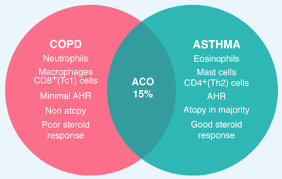
 Asthma-COPD overlap syndrome (ACOS) is a condition where a patient shows clinical features of both Asthma-COPD overlap and chronic obstructive pulmonary disease (COPD).
Asthma features: Variable airflow limitation, history of allergies or childhood onset, and symptoms that fluctuate over minutes, hours, or days and is often worse at night or early morning.
COPD features: Persistent, progressive airflow limitation (usually linked to a history of smoking or long-term exposure to noxious fumes/dust) and breathlessness related to physical activity.
Mixed Airflow Limitation: Features persistent, partly irreversible airflow obstruction alongside variable airway hyperresponsiveness.
Patients often experience more frequent and severe flare-ups/exacerbations than those with asthma or COPD alone.
Patients experiencing this overlap generally face a higher burden of disease, more frequent flare-ups (exacerbations), poorer quality of life, and higher healthcare utilization than those with asthma or COPD alone.
ACOS is associated with a faster decline in lung function and a higher use of healthcare services.
Common Risk FactorsSmoking History: Tobacco use or significant exposure to air pollution/smoke.
History of Atopy: Childhood allergies, eczema, or high IgE blood levels.
Age: Typically diagnosed in adults aged 40 and older who have a history of chronic respiratory issues.
Treatment ApproachCombines therapies for both conditions.
Asthma and COPD Overlap guidance.Usually includes inhaled corticosteroids (for the asthma/inflammatory component) combined with long-acting bronchodilators (for the fixed COPD obstruction).
Treatment and Management
Treatment typically requires a tailored combination of therapies managed by an allergist or pulmonologist.
Inhaled Corticosteroids (ICS): Essential to control the asthma-related airway inflammation.
Bronchodilators: Long-acting beta-agonists (LABA) and/or long-acting muscarinic antagonists (LAMA) are used to help open the airways.
Guidelines generally advise against prescribing a LABA without an inhaled corticosteroid if any asthma features are present.
Treatment should rarely rely on ICS alone if COPD features dominate.
Smoking cessation, pulmonary rehabilitation, and routine vaccinations (like flu and pneumonia shots) are crucial components.