

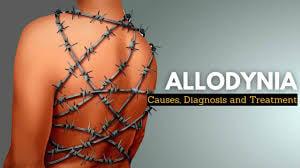
 Nonpainful stimuli which is perceived as painful.
Allodynia is a type of neuropathic pain where normally non-painful stimuli cause pain.
The nervous system misinterprets harmless sensations as painful ones.
Types of allodynia:
Mechanical allodynia – Pain from light touch, pressure, or movement that shouldn’t hurt.
Thermal allodynia – Pain from temperature changes that are normally comfortable.
Dynamic allodynia – Pain specifically from moving stimuli across the skin, like stroking or brushing.
Common causes of allodynia include:
Neuropathic conditions (diabetic neuropathy, post-herpetic neuralgia) Migraines and headache disorders Fibromyalgia Complex regional pain syndrome (CRPS) Nerve injuries Certain medications or chemotherapy Central sensitization syndromes
Allodynia occurs when there’s dysfunction in pain processing pathways.
The nervous system becomes hypersensitive.
Normal sensory neurons that typically don’t signal pain start activating pain pathways, or the central nervous system amplifies normal signals into pain signals.
Treatment: addressing the underlying condition and may include medications like anticonvulsants (gabapentin, pregabalin), antidepressants, topical anesthetics, or other neuropathic pain treatments.
Allodynia is a condition characterized by the experience of pain in response to normally innocuous stimuli such as touching, brushing or pressure on the skin.
The nervous system becomes hypersensitive and may send pain signals in response to something that would not usually be associated with pain.
Allodynia causes include: nerve damage, infections, fibromyalgia, and central nervous system disorders such as multiple sclerosis or neuropathic pain syndrome.
Treatment options for allodynia depend on the underlying cause and may include medications, physical therapy, and nerve blocks.